The krill fishery in the Southern Ocean has closed more than three months early after reaching its annual catch limit of 620,000 metric tons – a precautionary quota established to prevent overfishing
Francesco De Augustinis
On Aug. 12, for the second year in a row, the krill fishery in the Southern Ocean closed early after reaching its annual catch limit of 620,000 metric tons. This precautionary quota is intended to prevent overfishing from affecting populations of this shrimp-like crustacean, which forms the base of the region’s food chain.
The fishery’s early closure was confirmed by scientists attending the Scientific Committee on Antarctic Research (SCAR) Open Science Conference, held in Oslo, Norway, from Aug. 10 to 14, 2026.
“The fishery has closed early (before the end of November) because it has already caught 620,000t of krill,” Simeon Hill, marine and fisheries ecologist at the British Antarctic Survey, told Mongabay in an email.
Antarctic krill (Euphausia superba) can grow up to 6 centimeters (2.4 inches) long and live predominantly in schools. The species forms the basis of the diets of a large proportion of wildlife populations in Antarctica and the Southern Ocean, including seals, whales, penguins, seabirds, fish and squid. In the last two decades, krill has attracted growing commercial interest owing to its use in aquaculture feed, pet food and omega-3 supplements for human consumption.
The early closure of the fishery is linked to the growth of the fishing fleets targeting krill, as well as to the concentration of fishing activities in areas where krill is most abundant. These areas also coincide with the main feeding grounds of wildlife populations, raising concerns about the potential negative impact of this industry on the ecosystem.
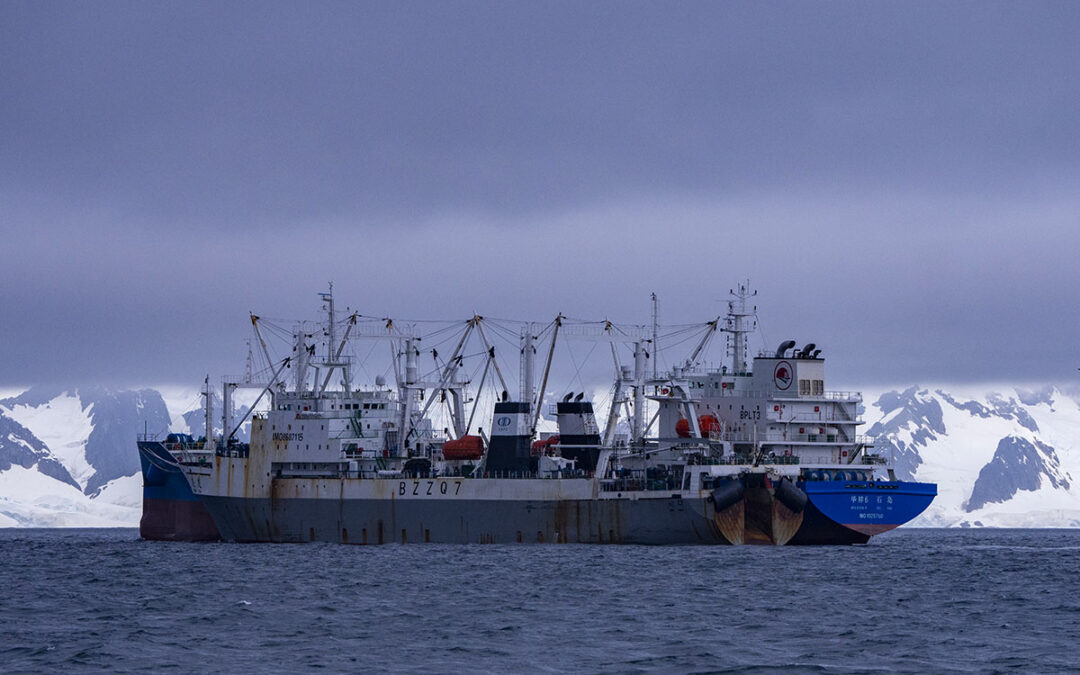
A Chinese flagged krill fishing vessel. Photo Matthew Savoca
A rush for krill
The krill fishery closed early for the first time in its history on Aug. 1, 2025, after the 620,000-metric tons trigger level was reached. This catch limit was established in 1991 by the 10th meeting of the Commission for the Conservation of Antarctic Marine Living Resources (CCAMLR), as a precautionary measure to avoid negative impacts within the foraging areas of vulnerable predators.
A second consecutive early closure was widely anticipated for 2026, given the growth of the fishing fleet and the concentration of vessels in areas with the highest krill densities, around the Antarctic Peninsula and the South Orkney Islands, following the expiration of Conservation Measure 51-07 in 2024. This measure had distributed fishing effort across four management zones to decrease competition with wildlife populations. Negotiations among CCAMLR members to renew it have been overtaken by a proposal to dramatically alter krill fishery management.
“We all knew that it was going to be reached again,” Maximiliano Bello, global marine protected area specialist for the Blue Marine Foundation, told Mongabay from Oslo, where he was attending the SCAR meeting as an observer.
Since the opening of this year’s fishery season, there has been a “competition” between companies to fish as much krill as possible before the closure, according to Bello. “And of course, some are faster than others because they have bigger vessels or more advanced technologies, and others also have more vessels,” he said.
According to the latest CCAMLR fishery report, in 2025 catches reached 624,917 metric tons. The fishery was dominated by the Norwegian fleet (326,307 metric tons or 52.2% of total catches) and the Chinese fleet (231,083 metric tons, 37% of catches), followed by South Korea (28,622 metric tons, 4.6%), Chile (20,035 metric tons, 3.2%) and Ukraine (18,871 metric tons, 3.0%).
As Mongabay reported in May, China and Norway have been working to expand the krill industry further, demanding increased catch quotas and supporting the expansion of their fleets. Following the record fishing season in 2025, Norwegian company Aker Qrill, which uses krill to produce ingredients for aquaculture, nutritional supplements and pet food, announced plans to add a fourth vessel to its fleet in 2026. CCAMLR also licensed a sixth Chinese fishing vessel this year.
At the previous CCAMLR meeting, held in Hobart, Australia, in October 2025, Norway also presented a proposal to abolish the trigger level by adopting a new management plan for krill that could have nearly doubled catches, moving away from a fixed catch limit system. The Norwegian delegation withdrew the proposal before the vote. Aker BioMarine, the parent company of Aker Qrill, has, however, since been working to reach an agreement on the same proposal ahead of the next CCAMLR meeting, scheduled for October.
“That’s still the push for this year, to try to increase the quota,” Bello told Mongabay, describing a diplomatic dispute involving Norway and China, on the one hand; and other countries, especially Argentina and Chile, that are instead pushing to establish an effective marine protected area in the Antarctic Peninsula, where most of the fishing activity is concentrated.
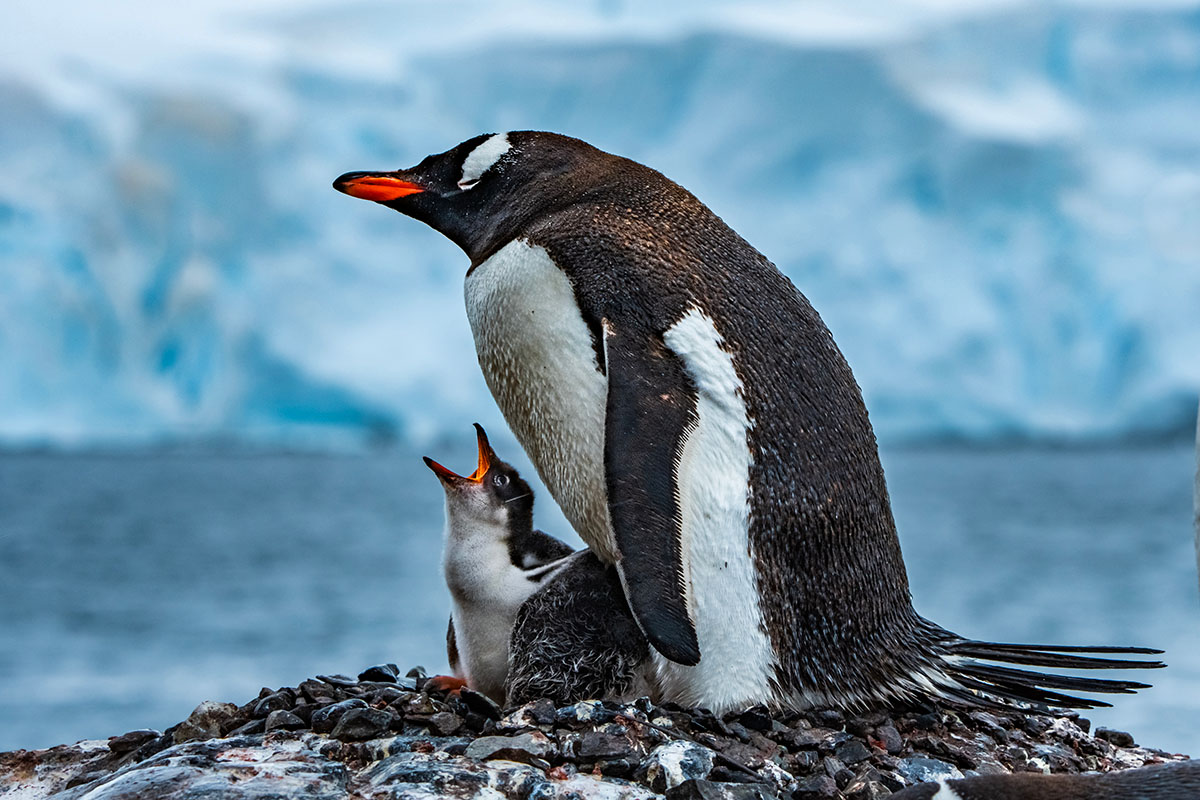
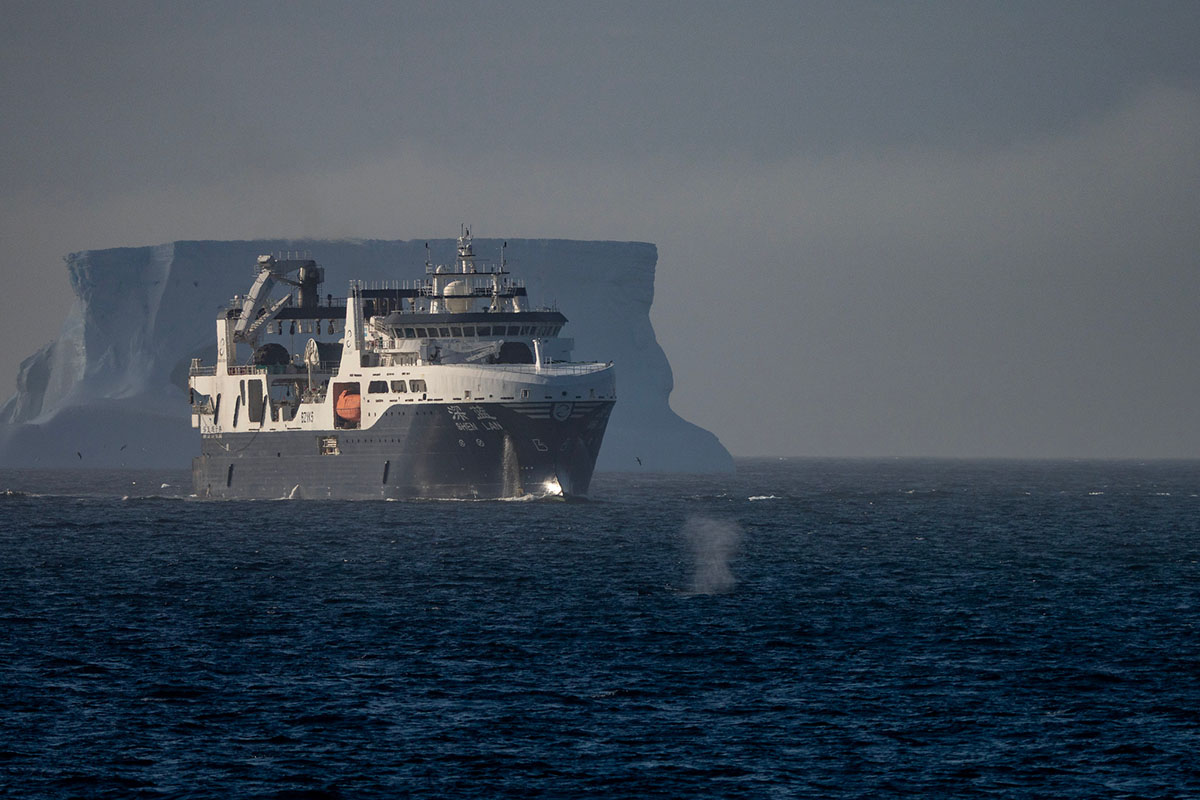
Photo: Shawn Heinrichs
Concerns over wildlife impacts
According to Matts Johansen, CEO of Aker BioMarine, the krill fishery in the Southern Ocean is “among the most strictly regulated and sustainably managed in the world.” In press release in July, he commented on the findings of a report by the U.N. Food and Agriculture Organization (FAO), which classified the krill fishery as “biologically sustainable” based on an assessment of the status of the stocks. “The Antarctic result stands out as proof that precautionary, science-based management works,” Johansen said.
By contrast, many scientists are concerned about potential ecosystem impacts of the concentration of fishing activity, particularly as climate change increases pressure on krill and wildlife.
“The 620,000t catch limit is considered to have minimal consequences for krill and its predators but only if catches are not concentrated in ecologically vulnerable locations and at important times, such as in penguin foraging grounds during the summer nesting season,” Hill from the British Antarctic Survey told Mongabay. “We are now seeing unprecedented levels of catch concentration. The exact consequences for wild populations are unknown, but CCAMLR should apply the precautionary approach and prevent catch concentration.”
Cover photo: Andy Mann / Our Antarctica
This story was also published on: