EU countries bordering the Western Mediterranean jeopardize new measures to save overfished hakes.
The European Hake (Merluccius merluccius), a symbolic species for the Western Mediterranean, could disappear from the region in the next few years due to decades of overfishing. Despite scientific evidence highlighting the decline in the stock, EU member states Italy, France and Spain, with the support of the EU Industry representative Europêche, have been pushing for months to revert a moratorium on new limitations on trawling activities requested by the European Commission, managing to weaken a new management plan adopted on tuesday in Brussels.
According to the latest data from the Scientific, Technical and Economic Committee for Fisheries (STECF), a research body within the European Commission, hake populations in the Western Mediterranean (which includes the Tyrrhenian Sea, the Ligurian Sea, the Gulf of Lion, the Sardinian Sea and the Balearic Sea) are below 10%, and are fished in quantities almost double (1.98) compared to the limits that would allow the stocks to regenerate.
“Hake is still in a situation of overfishing,” Francesco Colloca, research director at the integrated marine ecology department of the Stazione Zoologica Anton Dohrn, based in Naples, told us. According to Colloca, in the last 10 years a substantial decline in fishing activities imposed by the European Union has slightly improved the condition of some hake populations in the Western Mediterranean, along with some other species affected by overfishing, but the situation is still critical and further efforts are needed.
“It is necessary to reach the European Commission’s targets for maximum sustainable-yeld, the reduction of fishing effort must be carried out, perhaps progressively over a period of a few years, but it must be done if we want to give fishing a future,” Colloca said.
The regulation of trawling fishing in the Western Mediterranean was the focus of a heated Agrifish Council meeting, a European body that brings together the ministers of the Member States with responsibility for agriculture and fisheries. The council met on 9 and 10 December in Brussels with the task of setting the fishery opportunities in the Atlantic, the North Sea, and in the Mediterranean and the Black Seas for 2025.
The meeting was the tipping point of an internal debate between the European Commission – which has asked member states for urgent measures to reduce fishing pressure on hake and other species at risk in the Mediterranean – and the governments of Italy, France and Spain, which instead have negotiated a one-year moratorium on any new restrictions on fishery.
Implementing the management plan “with a strict reading of the scientific advice could result in measures which are not acceptable for our national and local economies,” stated EU member states Italy, France and Spain in a joint statement signed on november 18th.
The final outcome of the Agrifish meeting was a compromise: the proposed reduction in fishing days in the Mediterranean was adopted for 2025, along with a set of new “compensation measures” that could allow EU fleets to recover almost the same number of fishing days as in 2024.
The disappearance of hake
According to data from the General Fisheries Commission for the Mediterranean (GFCM), a body of the Food and Agriculture Organization of the United Nations (FAO), Italy, France and Spain have a fleet of over 12 thousand vessels in the Mediterranean, of which 14% are trawlers and pure seiners, for pelagic or demersal species. Italy alone, with almost 10 thousand vessels, is the third largest fleet in the Mediterranean sea after Turkey and Greece.
The three EU member states fish approximately 950 thousand tonnes of fish in the Mediterranean every year, including 2.3 thousand tonnes of hake in the fishing areas off France and Spain (compared to the 1.2 thousand tonnes considered sustainable by STECF) and 2 thousand tonnes along the Italian coasts (compared to the 1.3 thousand tonnes considered sustainable).
To address the overfishing of hake and other species which live close to the seabed, also referred to as demersal species, the European Commission launched a multi-annual management plan dedicated to the Western Mediterranean in 2019 called the WestMed MAP. The legally binding 5-year transitional plan was based on the STECF assessments, and committed all EU member states to implement urgent measures to reduce fishing pressure on European hake and five other marine species, including Blue and red shrimp (Aristeus antennatus) and the Norway lobster (Nephrops norvegicus), in order to bring these populations “above levels which can produce the maximum sustainable yield” by January 1st, 2025. After this date, the Commission’s proposal indicates that the multiannual plan for demersal stocks in the Western Mediterranean would become permanent.
During this five year transitional period, the implementation of the plan achieved a 40% drop in allocated trawling days for the fleets of EU member states, as well as the introduction of other specific measures, such as the closure of some sensitive areas to fishing, or the use of nets with larger mesh sizes, to avoid catching juveniles. These measures, according to observers, have generated some signs of recovery in some populations, but failed to achieve the overall targets of the plan.
“Among the fish populations analysed, 46% are critically overexploited, 39% are overexploited, and only 15% have a biomass above sustainable levels. This means that the MAP’s objective has not been met for 85% of the fish populations included in the plan,” a report published in May by the NGO Oceana, which aggregates data from the STECF and the GFCM.
“It’s one minute to midnight at this point,” Giulia Guadagnoli, campaign manager at Oceana, told us. “Now it’s the time to adopt emergency measures to save the hake, because saving one species will help saving the ecosystem, the local communities, the Mediterranean sea as a whole, and ultimately our identity,” she said.
A political conflict
Based on a new assessment produced by the STECF, in recent days the European Commission has proposed to the governments of Italy, France and Spain a further package of fishing restrictions for 2025.
“STECF advised that […] further significant reductions of fishing mortality are necessary for
trawlers,” the document reads. For hake, the Commission called for a 66% reduction in fishing in French and Spanish waters and 38% in Italian waters. The Commission also called for emergency measures to support the recovery of stocks, such as “the further improvement of selectivity of fishing gear and of efficient closure areas to protect juvenile fish and spawners.”
A month earlier, in November, Europêche, the representative body for the fishing industry in the European Union, published a position paper calling for a moratorium on any further restriction of demersal fishing in the Western Mediterranean. In the statement, Europêche argues for an extension of the timeline for achieving environmental targets “to allow companies adequate time to adapt and reach those goals,” as well wait until the results of assessment of all fishing effort limitations policies set to take place in 2027.
“We said five years ago that it was impossible to achieve the targets,” Javier Garat Pérez, President of Europêche, told us. “Because even stopping the fishing activities, that would not happen. We need to talk about environmental and biological sustainability but also socio economic,” he said.
In the days leading up to the Agrifish meeting, the EU industry’s position was fully echoed by the EU member states Spain, France and Italy: “Given the significant socio-economic consequences of the implemented measures, it is necessary to reflect on the future implementation of the MAP, particularly regarding the diminution of fishing effort,” they wrote in a letter to the Commission.
The Italian government’s Minister of Agricultural Policies and Fisheries Francesco Lollobrigida told the press that “the moratorium requested for 2025 will allow the sector to find a balance between environmental sustainability and economic development.”
Therefore the ambitious requests expressed by the European Commission were received by the industry as an act of hostility: “The sector reacted as this was a declaration of war,” Garat Pérez told us. “Fisheries are ready for demonstration. They live inside the palaces in Brussels, but don’t understand what happens in the harbors, this is very serious.”
The Commission’s proposed reduction in fishing days for 2025 was approved, but a series of new “compensatory measures” were also introduced, such as the use of larger mesh nets or the establishment of new closed areas for fishing vessels, which could allow fleets to recover almost all of the fishing days as in the previous year.
“In order to maintain the number of days of fishing, an additional effort will have to be made, which not everyone will be able to meet,” Garat Pérez commented. “In particular, the need to change fishing nets again,” he said, demanding for new subsidies to support the fleets.
On the other hand, according to Guadagnoli, “the uncertainties surrounding the new compensation mechanism that grants extra fishing days to trawlers raise doubts about its ability to ensure the sustainable exploitation of all fish populations.”
Fishermen in the middle
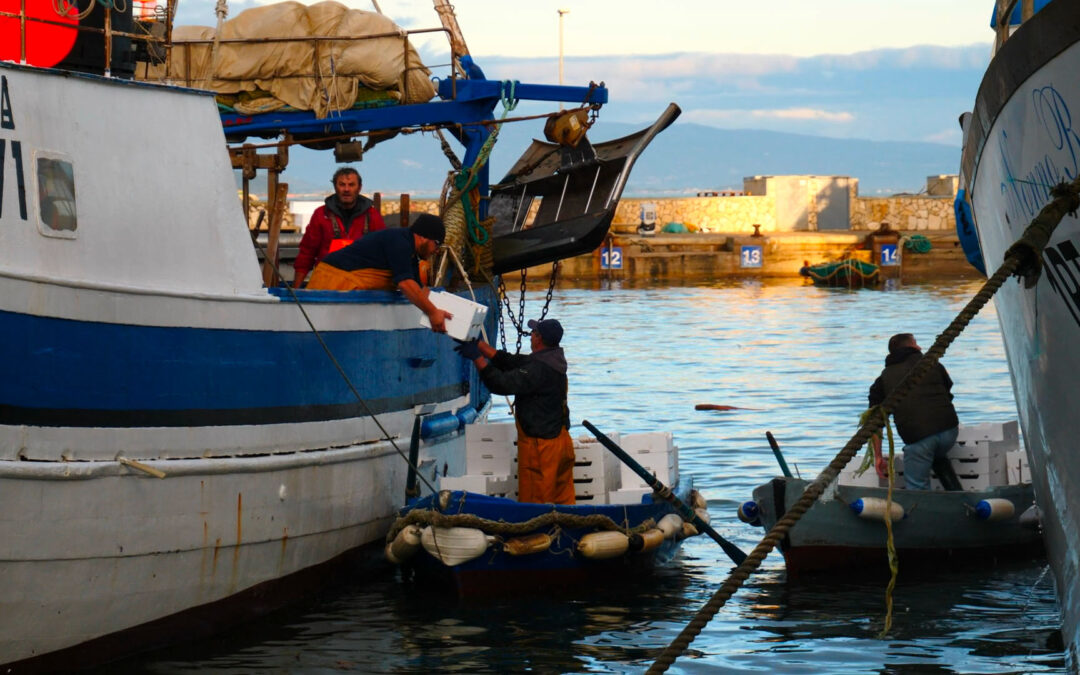
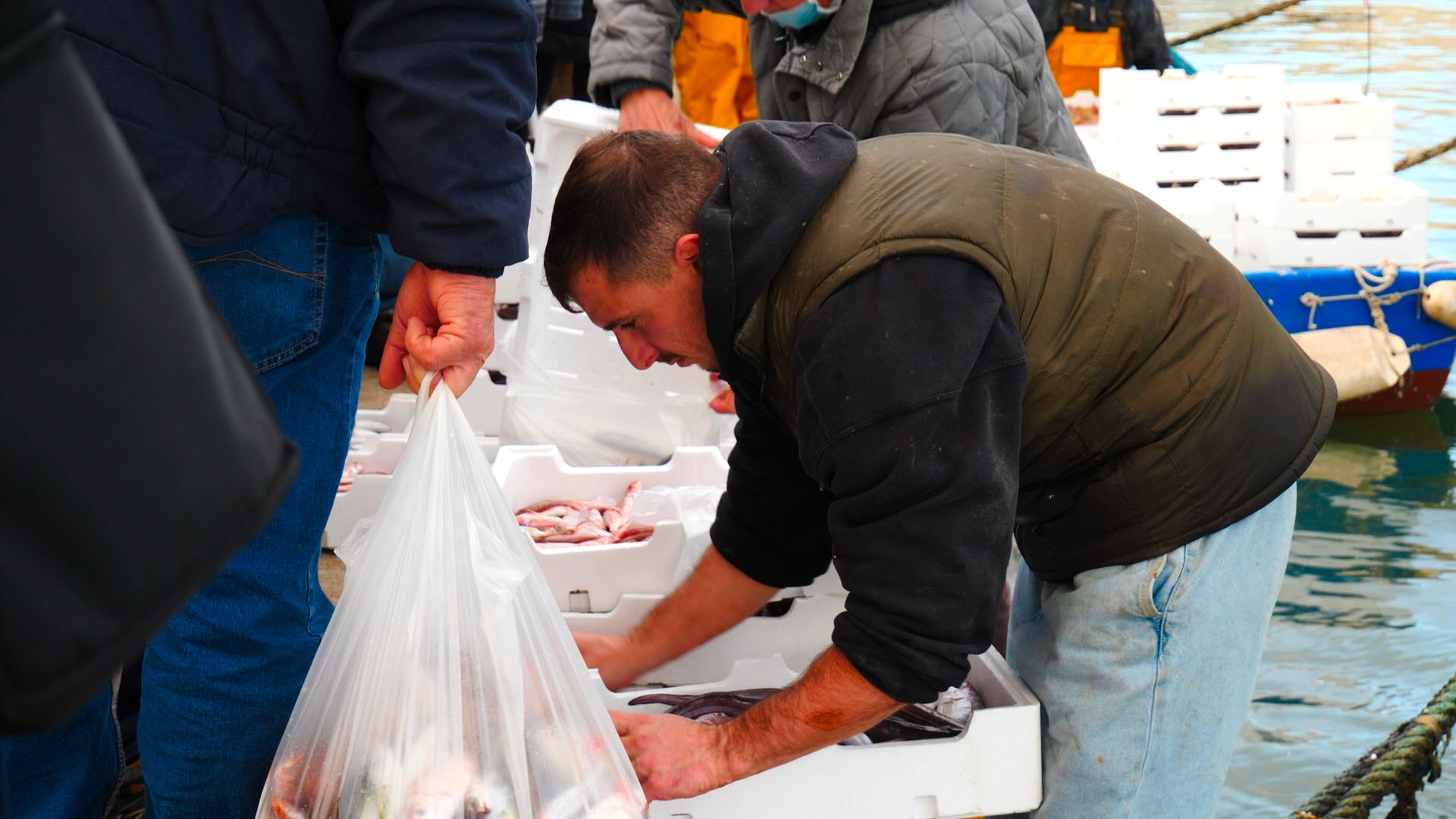
In the midst of this political conflict are fishing communities and small scale fishermen, who, for years have not only been suffering from the impacts of overfishing and dwindling fish stocks, but also the impact of a reduction in fishing days and other conservation measures. We clearly felt this climate in the ports we visited for this story in Spain and Italy.
“Because of Europe, we work between 140 and 150 days a year,” said Paco Català, president of the Fishermen’s Cooperative of Calpe, 120 km south of Valencia, Spain. According to Català, fishermen cannot be blamed for overfishing, as the fleet in Calpe alone has gone from almost 40 vessels to 13 in the last 10 years, which are actually working between 140 and 150 days a year. “Why don’t they want us to work? They ask us not to exploit the sea, but we are not the problem,” he told us.
Massimo Siccardi, who works in the wholesale fish trade in Anzio, 30 km south of Rome, in the last decades has witnessed a drastic impoverishment of fish resources in the sea of central Italy.
“Everything has disappeared here, there is nothing left,” Siccardi told us, blaming decades of unregulated fishing practices. “In the 1980s there was plenty of fish, fleets from Civitavecchia, Piombino, even from Sicily came here to Anzio, because there was so much fish. They stayed for the season, from March to September,” he said.
Despite the EU fishing fleet receiving fuel tax subsidies, amounting to between €759 million and €1.5 billion annually, local fishermen are allegedly still unable to generate sufficient profits from fishing. According to Siccardi, “the catch has decreased by 70 percent,” and some species, such as the European hake, have disappeared almost completely, so the fishermen “are forced to go as far out as possible. Every time they go out they consume 600 to 700 euros of diesel, so if they don’t catch at least 3-4 thousand euros of fish they don’t gain enough.”
According to Colloca, the conflict between politics and fishermen is based on false assumptions, since the EU management policies are needed to safeguard the fishing industry: “The reduction of fishing effort affects fleets in the short term, but in the long term it guarantees their survival,” the researcher told us. “Unfortunately, politics thinks in the short term,” he said.
Overfishing and over consumption
A cross analysis of production and consumption data also reveals that the issue of overexploitation of stocks is also linked to an issue of hyper-consumption, so much so that EU countries, despite the overexploitation of most fish resources, are extremely dependent on fish imports.
According to the FAO, the global per capita annual consumption of fish products rose from 9.1 kg in 1961 to 20.7 kg in 2022. In the Western Mediterranean region, according to the European Market Observatory for Fisheries and Aquaculture Products, Italy landed 149k tonnes of fish products in 2021, produced 146k tons from aquaculture, and imported 1.2 million tons of fish products, to meet a per capita consumption of 30.15 kg. France landed 484k tonnes, produced 193k tons from aquaculture, and imported 1.4 million tons of fish products for a per capita consumption of 32.18 kg. Spain landed 758k tons, produced 276k tons from aquaculture and imported 1.8 million tons of fish products, for a per capita consumption of 42.98 kg per year.
“The reduction of catch limits in the Western Mediterranean represent positive developments agreed today by France, Italy and Spain during the Fisheries Council,” Guadagnoli told us a few hours after the Agrifish meeting. “We now expect swift and effective implementation to achieve tangible stock recovery, which is essential to safeguard our oceans, protect biodiversity and ensure the long-term sustainability of coastal communities.”
This story was supported by the Internews’ Earth Journalism Network – Mediterranean Media Initiative
This investigation was also published on: