Members of the Inter-American Tropical Tuna Commission (IATTC) agreed to adopt a harvest strategy to ensure sustainable long-term management for Pacific bluefin tuna, which a decade ago had fallen to 2.6% of its historic population due to excessive catches, but has since recovered substantially following implementation of a stock rebuilding plan.
Francesco De Augustinis
The annual meeting of the Inter-American Tropical Tuna Commission (IATTC) concluded on Sept. 4 with an agreement to adopt a long-term harvest strategy for Pacific bluefin tuna. The agreement aims to ensure sustainable management of this species, which has only recently recovered after decades of overfishing. But the commission fell short of establishing a harvest strategy for other tuna species — bigeye, skipjack and yellowfin — managed under the convention.
“A proposal was adopted … and that’s really great progress,” Dave Gershman, a senior officer for international fisheries at the U.S.-based think tank The Pew Charitable Trusts, who took part in the meeting as an observer, told Mongabay.
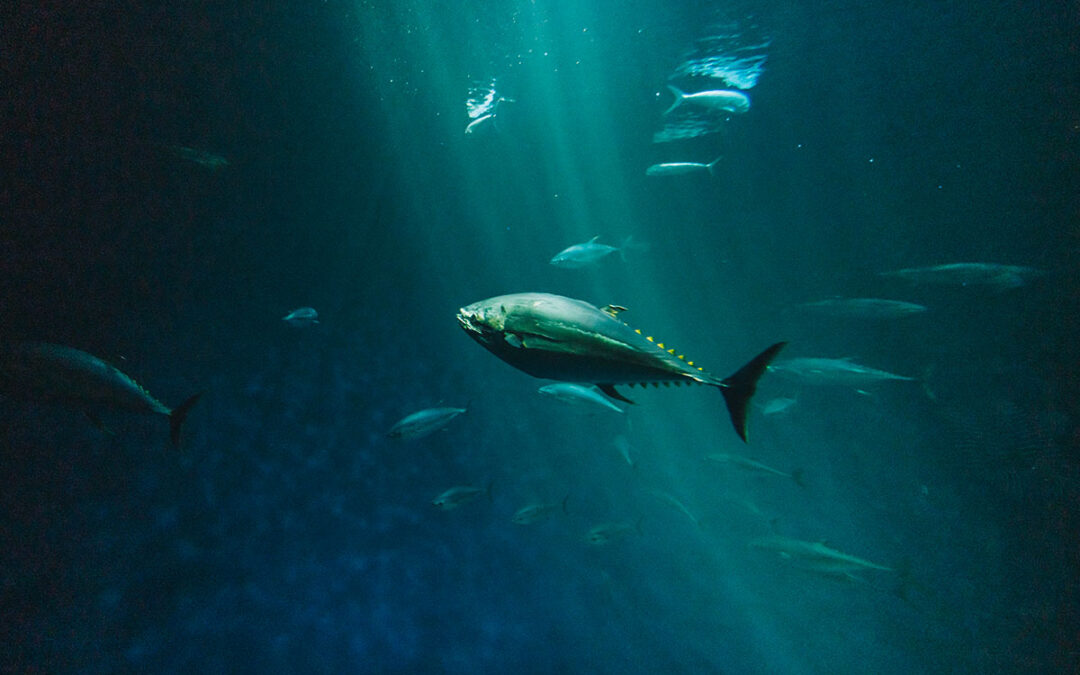
The commission approved the plan for Pacific bluefin tuna (Thunnus orientalis) after 10 years of research and mediation. The plan establishes science-based rules to support the stock’s complete recovery and long-term protection while taking into account impacts on the broader ecosystem. “You want to have these things in place when times are good so it’s there when you need it,” Gershman said.
The 104th meeting of the IATTC took place in Lisbon from Aug. 31 to Sept. 4. One of five main regional fishery management organizations (RFMOs) responsible for tuna and tuna-like species, the commission is tasked with managing six tuna stocks, associated species and their ecosystems throughout the Eastern Pacific Ocean, from Canada south to Chile.
The most heavily fished species in the IATTC convention area are yellowfin tuna (Thunnus albacares, with 314,230 metric tons caught between January and August 2026); skipjack tuna (Katsuwonus pelamis, with 217,807 metric tons caught during the same period); bigeye tuna (Thunnus obesus, with 16,330 metric tons caught); and Pacific bluefin tuna (with 3,928 metric tons caught). The species are primarily caught by vessels flying the flags of Ecuador, Mexico, Panama, the United States and Venezuela.
While yellowfin, skipjack and bigeye are managed exclusively by the IATTC, Pacific bluefin tuna is managed through a joint working group between the IATTC and the other main tuna RFMO in the Pacific Ocean, the Western and Central Pacific Fisheries Commission (WCPFC), as the species comprises a single population spanning the entire Pacific.
It was this working group, which met three times in 2026, that led to the proposal put forward by Japan, the U.S. and Mexico, resulting in the adoption of the Pacific bluefin harvest strategy. In 2016, the population had fallen to 2.6% of its historic size, prompting the IATTC to approve a rebuilding plan the following year that led to a substantial recovery.
The adoption of a long-term harvest strategy aims to complete the species’ recovery, while also allowing for slight increases in total catches, with automatic reductions in catch levels should a new decline occur. According to Gershman, for the measure to be truly effective, the WCPFC will need to adopt a complementary harvest strategy for its own waters at its next meeting, scheduled for Nov. 30 to Dec. 4 in Vanuatu.
“The [IATTC] members who participate in the joint working group — Japan, Korea, the U.S. and Taiwan — they’ve all endorsed this. So we’re hopeful that the other members of the WCPFC will join,” he said.
No deal for tropical tuna
IATTC members failed to reach an agreement on another anticipated management framework concerning three other tuna species: Bigeye, yellowfin and skipjack. They are often caught together, so the proposals before the IATTC aimed to establish a multispecies long-term harvest strategy — a world first — so that signs of a population decline in one species would trigger restrictions on fishing across all three.
According to IATTC stock assessments, these populations are “in healthy condition.” Even so, in position statements submitted ahead of the meeting, groups representing the tuna industry, including the Global Tuna Alliance and the International Seafood Sustainability Foundation, called for the adoption of a harvest strategy to establish predictable rules and give global seafood markets greater confidence in the sustainability of these fisheries.
“The market is increasingly concerned that the IATTC is lagging behind other RFMOs in adopting modern, predictable, and science-based management tools,” Wetjens Dimmlich, advocacy lead at the Global Tuna Alliance, told Mongabay in an email. “For the global tuna market, confidence that the tuna is sourced from stocks sustainably managed through well tested MPs [long-term harvest strategies] is critical,” he said.
But IATTC members did not approve proposals put forward by the European Union, Ecuador and the United States. According to Gershman, the failure to reach consensus, required to adopt any measure under IATTC rules, was due to opposition from “a group of countries” calling for greater fishing capacity. He declined to name the countries.
Dimmlich said Global Tuna Alliance was disappointed with the “failure” to adopt a harvest strategy for these species, and “deeply concerned by the IATTC’s procedural shortcomings.”
“It has become a recurring issue that critical management proposals are only presented or tabled on the final day of the meeting, creating a bottleneck that prevents member delegations and observers from giving important management measures the proper consideration they require,” he said.
Transparency and rights
At the opening of the meeting, NGOs belonging to the European IUU Fishing Coalition issued a joint statement calling on IATTC members to adopt new measures to improve transparency and combat illegal, unreported and unregulated (IUU) fishing.
The statement set out a series of measures it called “minimum” requirements for all RFMOs. It specifically called on the IATTC to improve transparency around the “beneficial owners” of fishing vessels to enable identification of the persons “who ultimately profit” from a vessel’s activities so they can be held to account for any violations. It also called for the body to adopt onboard inspections, more stringent labor standards and stricter rules at port to reduce the risk of IUU-caught fish entering international markets.
According to Gershman, proposals put forward by Ecuador and Canada during the meeting that called for greater transparency and improved monitoring were not adopted, while only preliminary discussions on port measures got underway. “So we kind of hope someone brings forward a measure next year,” he said.
IATTC members did not discuss the issue of labor standards at all. “We must highlight a major gap in the commission’s agenda: The continued absence of labour standards and worker conditions,” Dimmlich said. “Sustainable and responsible fisheries management encompasses the people who make the industry possible, and the IATTC is significantly lagging behind other RFMOs in this regard.”
This story was also published on: