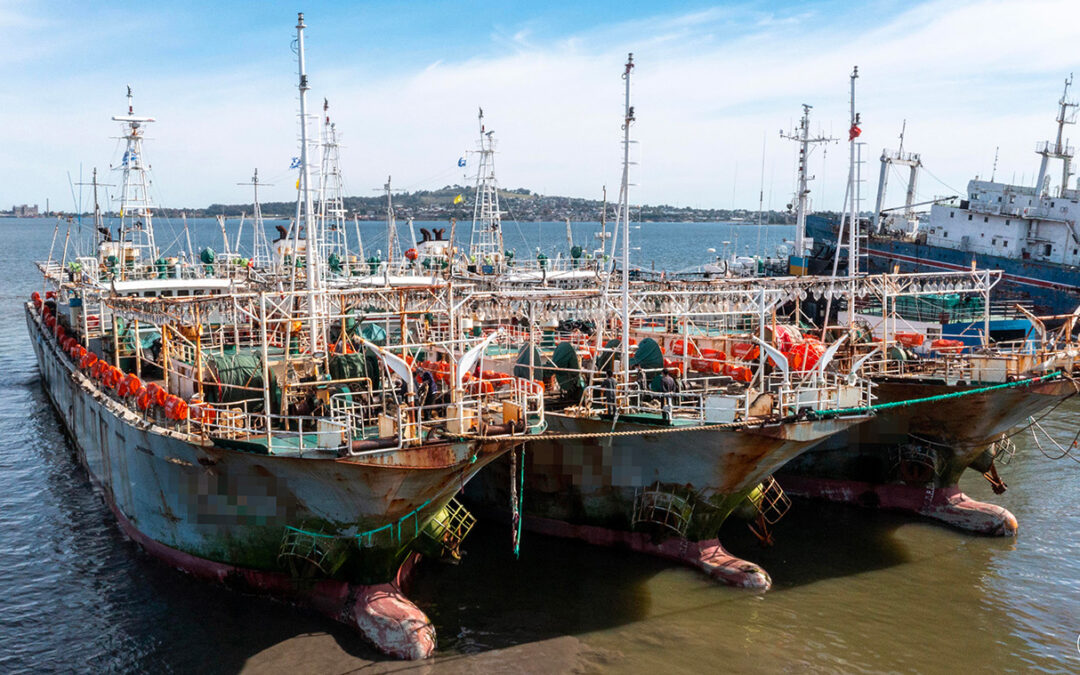
The 14th meeting of the South Pacific Regional Fisheries Management Organisation (SPRFMO) took place in Panama City from March 2-6. Key decisions concerned tightening regulation of the jumbo flying squid fishery following increased fishing activity and signals of overfishing, and adopting measures to reduce illegal fishing practices and labor abuses in the squid fleet.
A lower limit on the size of the fleet targeting jumbo flying squid in the South Pacific Ocean, improved controls at ports and the introduction of electronic monitoring systems on board vessels to rein in illegal practices and labor abuses: These were the main outcomes of the 14th meeting of the South Pacific Regional Fisheries Management Organisation (SPRFMO), which concluded in Panama on March 6, marking steps toward tighter regulation of fisheries, especially for squid, in the vast swath of ocean the body manages.
“It’s a part of the world’s largest squid fishery … so it was very positive that attention was being paid to it,” Dave Gershman, a senior officer on international fisheries at the U.S.-based think tank The Pew Charitable Trusts, who attended the meeting as an observer, told Mongabay just minutes after the closure. “But this is only the start of what’s needed to put in place science-based management.”
The SPRFMO annual meeting took place in Panama City March 2-6. The intergovernmental organization includes 17 members (16 countries and the European Union) and was established in 2012 with the aim of ensuring the long-term conservation and better regulation of fishing activities (except for tuna fishing) in the high seas of the South Pacific, an area encompassing about 59 million square kilometers (23 million square miles).
The most anticipated decisions at this year’s meeting concerned tightening regulation of the jumbo flying squid (Dosidicus gigas) fishery, following increased fishing activity and signals of declining stock. Decision-makers also took steps to address documented labor abuses in the squid fishery by tightening onboard monitoring and port control rules.
The body made limited progress toward finalizing an anticipated new management procedure for jack mackerel (Trachurus murphyi). Negotiations over regulating bottom trawling remained stalled.
A cap on squid fishing vessels
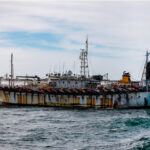
The number of squid-jigging vessels targeting jumbo flying squid on the high seas within the SPRFMO convention area ballooned from 14 in 2000 to 289 in 2014, and to 531 in 2024. Almost all (528 in 2024) fly the Chinese flag.
The last decade has also brought a significant drop in squid catches, from more than 1 million metric tons in 2014 to 601,000 metric tons in 2024, raising concerns about overfishing. For the fifth year, the SPRFMO Scientific Committee did not agree on a stock assessment system, which is a prerequisite for setting catch limits for the species. Currently there are none.
“We were informed that the stock assessment of squid was not deemed a high priority this
year,” the Committee for the Sustainable Management of the Jumbo Flying Squid of the South Pacific (CALAMASUR), which represents artisanal and industrial fisheries from Chile, Ecuador, Mexico and Peru that operate mainly in those countries’ waters adjacent to SPRFMO territory, wrote in a letter to the Scientific Committee. “We believe that delaying the stock assessment signals a lack of clarity regarding the priorities of this organization, which could jeopardize the livelihoods of tens of thousands of artisanal fishers,” the group said.
The SPRFMO Commission approved a proposal from the U.S. and New Zealand to enact a precautionary reduction in the maximum number of vessels that can target squid in SPRFMO waters, from 766 to 651, as well as in their combined tonnage limit.
Gershman praised the measure as demonstrating that members recognized the need to better manage this fishery, “but this change is insufficient,” he said.
“The reduction is unlikely to reduce actual fishing pressure on jumbo flying squid,” Gershman said, noting that the current fleet is smaller than the new limit. “Members committed to revisit squid management in 2027, and they should develop a more automated, science-based plan for the species.”
The commission did not approve a proposal from Peru to create a buffer zone outside the exclusive economic zones of South American countries to prevent possible illegal incursions by the fleet operating in the high seas.
Transparency and accountability
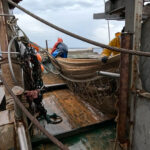
Prior to the meeting, several reports and journalistic investigations, the latest being one published in February by the U.K.-based NGO Environmental Justice Foundation, exposed violations aboard the Chinese squid fleet. These included violence, withheld wages and other labor abuses, and controversial fishing practices that SPRFMO does not regulate, such as shark finning and the killing of marine mammals.
The commission did not adopt a proposal by the U.S. and New Zealand “to improve working conditions and reduce labor rights violations on fishing vessels.”
But it did adopt a new measure that mandates monitoring of the squid fishery to reduce labor and fishing violations, starting with 5% of fishing days on Sept. 1, 2027, and rising to 10% of fishing days in 2029. This monitoring will be conducted partly by human observers and increasingly by electronic monitoring systems.
To enable this, the commission also adopted electronic monitoring standards to apply to fishing vessels, starting with the jumbo flying squid fishery. This system will allow governments to deploy onboard cameras and computer systems to enhance monitoring, transparency and reporting, and to prevent misconduct and illegal practices.
The commission also approved a European Union proposal to align SPRFMO rules with the international Port State Measures Agreement. This includes strengthened port entry requirements, increased onboard inspections and information-sharing mechanisms to improve communication between countries working to prevent illegal fishing.
Ahead of the meeting, the U.S.-based NGO Global Fishing Watch asked SPRFMO to publish vessel ownership information. “SPRFMO stewards nearly a quarter of the world’s high seas,” Michele Kuruc, GFW’s acting director of international policy, told Mongabay in a written statement. “We are calling on members … to require disclosure of vessels’ ultimate beneficial owners, revealing who truly profits from fishing activity and closing the loopholes exploited by bad actors.” The commission did not act on the request.
Other fisheries
The commission was expected this year to adopt a harvest strategy for jack mackerel to automate management decisions based on scientific stock assessments, but it did not. The primary goal is to keep the species in the so-called “Kobe Green Zone,” where it is neither overfished nor subject to overfishing.
“They kind of came up with a plan this week to finish that work,” Gershman said. “They were supposed to be done and ready for presentation to the commission this year in this meeting, but unfortunately it’s continuing.”
Bottom trawling regulations were a point of contention at the meeting. The fishing method, in which vessels drag heavy gear on the seafloor, is only practiced by New Zealand vessels in SPRFMO-managed waters, particularly in the Tasman Sea.
The NGO Greenpeace Aotearoa presented a study to SPRFMO describing how researchers descended to a depth of 1,200 meters (3,937 feet) on one of the seamounts in an area of the Tasman Sea known as Lord Howe Rise and documented 350 corals, sponges and other deep-sea lifeforms, “many of which are over 100 years old and some reaching almost 2 metres [6.5 ft] in height,” the NGO stated in a press release. The study contends these are evidence that vulnerable marine ecosystems (VMEs) occur in the Lord Howe seamounts, and Greenpeace says they should be closed to bottom trawling.
“Those seamounts tend to be home to very fragile coral and sponge species that are incredibly slow growing,” Ellie Hooper, ocean campaigner at Greenpeace Aotearoa and a co-author of the study, told Mongabay. “So you can imagine that when the bottom trawling nets physically drag across a coral ecosystem in the deep, what you’re going to get is, kind of, a bulldozing effect.”
For its part, New Zealand submitted a proposal to increase the amount of coral a vessel can haul up before it must move and the area is closed to fishing. Part of Lord Howe Rise was temporarily closed to fishing in 2024 after a New Zealand trawler dragged up 37 kilograms (82 pounds) of coral.
“The aim of this proposal is to ensure the bycatch threshold rules are set at a level based on the best available scientific information, and that they are not more restrictive than is biologically necessary,” Charlotte Denny, divisional manager of sustainable trade and environment at the New Zealand Ministry for Primary Industries, told Mongabay in a written statement.
In the end, neither side left the meeting fully satisfied. New Zealand’s proposal did not proceed, and as it did at previous meetings, New Zealand blocked an Australian proposal to implement an agreement reached in 2023 to restrict fishing areas to better protect coral and VMEs.
(Photo by Environmental Justice Foundation)
This story was also published on: