Plans to expand fish farms along Greece’s coasts and their impact on landscapes, ecosystems and communities.
by Panayotis Anagnostakis
When Spyros Kounadis was 20 years old, Astakos coastline was an open stretch of sea dotted by small ports and fishing boats. Now, the area of Mytikas and Echinades islands in Western Greece is mostly occupied by floating cages, moorings and service vessels.
“Everything is becoming industrial,” says the 60-year-old fisherman, president of the local fishers’ association. “That’s where things are going.”
Since 2011, Greece has tried pushing the expansion of the aquaculture sector throughout its gulfs and bays. In November of that year, it adopted a Special Framework for Spatial Planning and Sustainable Development for Aquaculture, a detailed national zoning plan defining specific areas for the installation and operation of marine aquaculture units. By establishing Areas of Organised Aquaculture Development (AOAD), the country aimed to increase production from 980 hectares to 24,000 across Greece, 24 times the current expansion.
Since then, the plan covering 25 designated aquaculture zones has faced repeated delays, with only a small number formally established so far, due mainly to regulatory bottlenecks, planning disputes, protests and administrative delays.
Astakos and the nearby village of Mytikas are small seaside communities on Greece’s western Ionian coast, historically shaped by fishing and maritime activity and surrounded by sheltered bays that favour aquaculture development.
Differently from other designated locations with a clearer tourist vocation and a stronger local opposition, in 2023 a presidential decree approved the sector expansion in the Astakos region, western Aetolia-Acarnania and the Echinades Islands, creating the premises for one of the largest intensive fish-farming zones in the country, covering more than 2,270
hectares of sea and coastal land. Once implemented, planned production is expected to have an unprecedented increase – up to 21 times current levels – and to exceed 52,000 tonnes of farmed fish annually. This would be more than the combined annual seabream and seabass production of the EU’s other leading producers, Spain and Italy, which together produced around 46,000 tonnes in 2022. Other parts of Greece are expected to be awaiting a similar destiny.
According to EU data for 2023, Greece records around 63,000 tonnes of wild catches, compared to more than 140,000 tonnes produced through aquaculture. “We’ll only be eating farmed sea bream and sea bass,” Kounadis says. “Everything will come from aquaculture.”
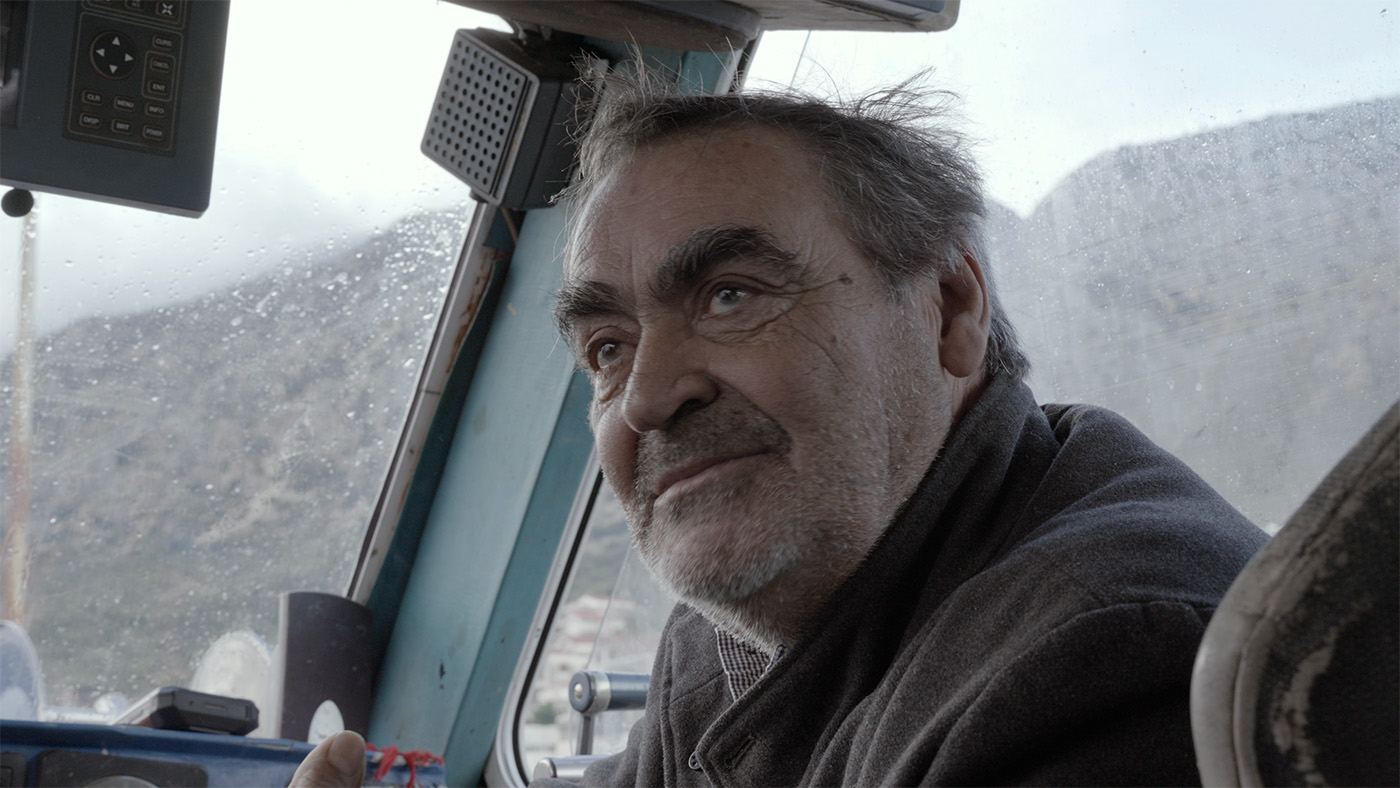
Spyros Kounadis, president of the local fishers’ association, on his boat in Astakos, Western Greece
Constantinos Avdis, a small fish farmer running a 20-hectare operation in Mytikas, defends the introduction of spatial planning, the regulatory framework designating specific zones for aquaculture and setting limits on where and how farms can operate.
“It brings order,” he says. “Before, anyone could set up something if they had connections.”
According to Avdis, Greece’s growth in aquaculture comes from its long rugged coastline and from being able to spread farms across many sheltered bays. “Concentrating everything in one place would create disease problems,” he argues, adding that offshore farming also faces significant challenges due to rough weather and sea conditions, making it dangerous.
Critics, however, supported by some researchers, argue that this closeness to the coast often limits water circulation, warning that a sheltered shoreline doesn’t help the dispersion of organic waste, causing it to accumulate on the seabed.
For local fishers, the concentration of farms along the coastline has already become excessive. “There are about 26 fish farm units in this area. That’s too many. The system can’t handle it,” Kounadis says. “They even legalized installations that were previously illegal. That’s why there’s tension. If things had been done properly, we could all coexist.
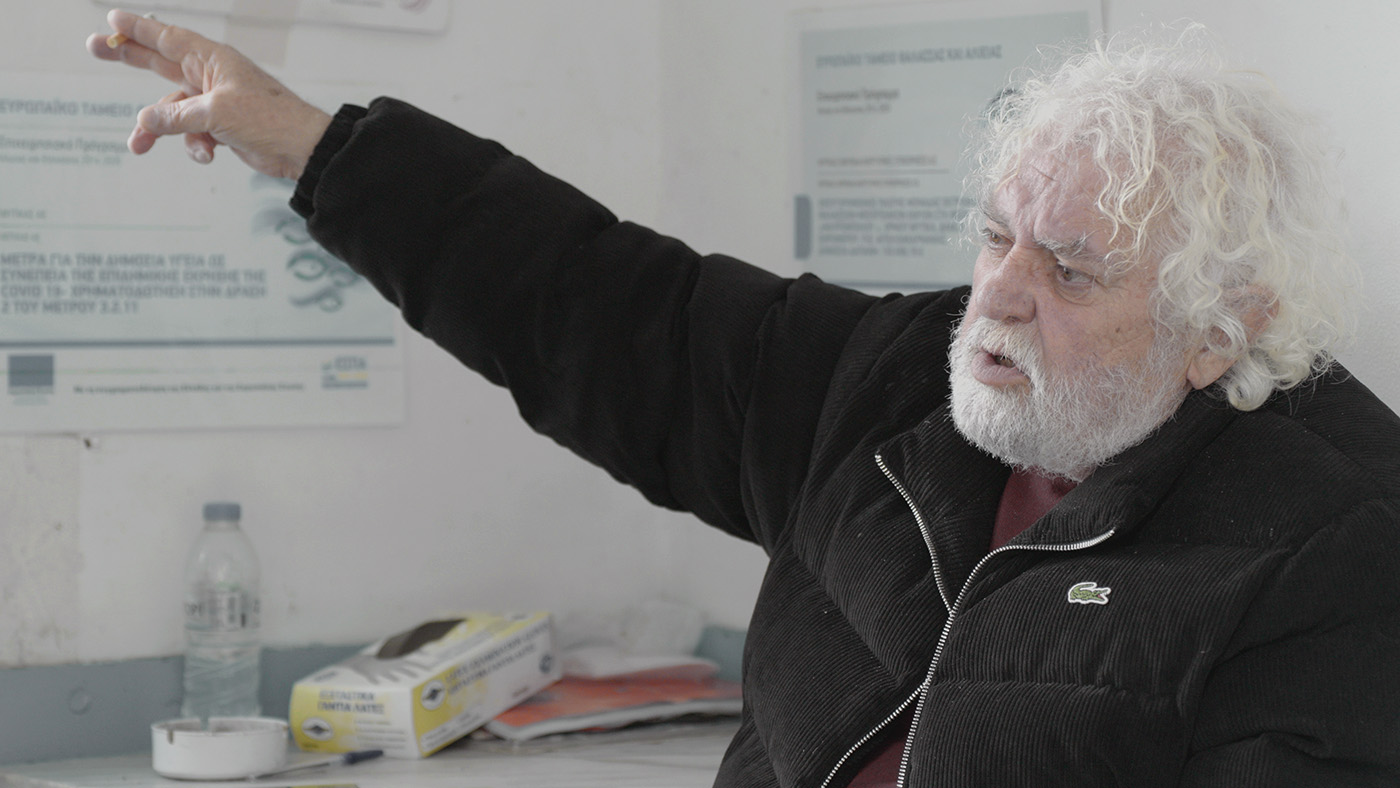
Constantinos Avdis, a small fish farmer, at his office in Mytikas, Western Greece
On the island of Poros, strong local opposition supported by Aktaia, a panhellenic alliance of communities and organisations opposing the large-scale expansion of industrial fish farming to a planned aquaculture development zone led to a 2025 decision to reject the project, effectively cancelling the expansion and marking a rare reversal of Greece’s spatial planning for fish farming.
But in other parts of Greece, the expansion of aquaculture has been less contested, particularly in regions where fish farming is already embedded in the local economy and export-oriented production.
In Astakos, the 2023 presidential decree sparked surprise and discontent among local residents and the authorities of the coastal town, who formally objected to the expansion plan. In March 2025, Greece’s Council of State reviewed a legal challenge to the AOAD, filed by municipalities and civil society groups, with a decision expected later this year. The decree currently stands, but its legal stability remains unresolved.
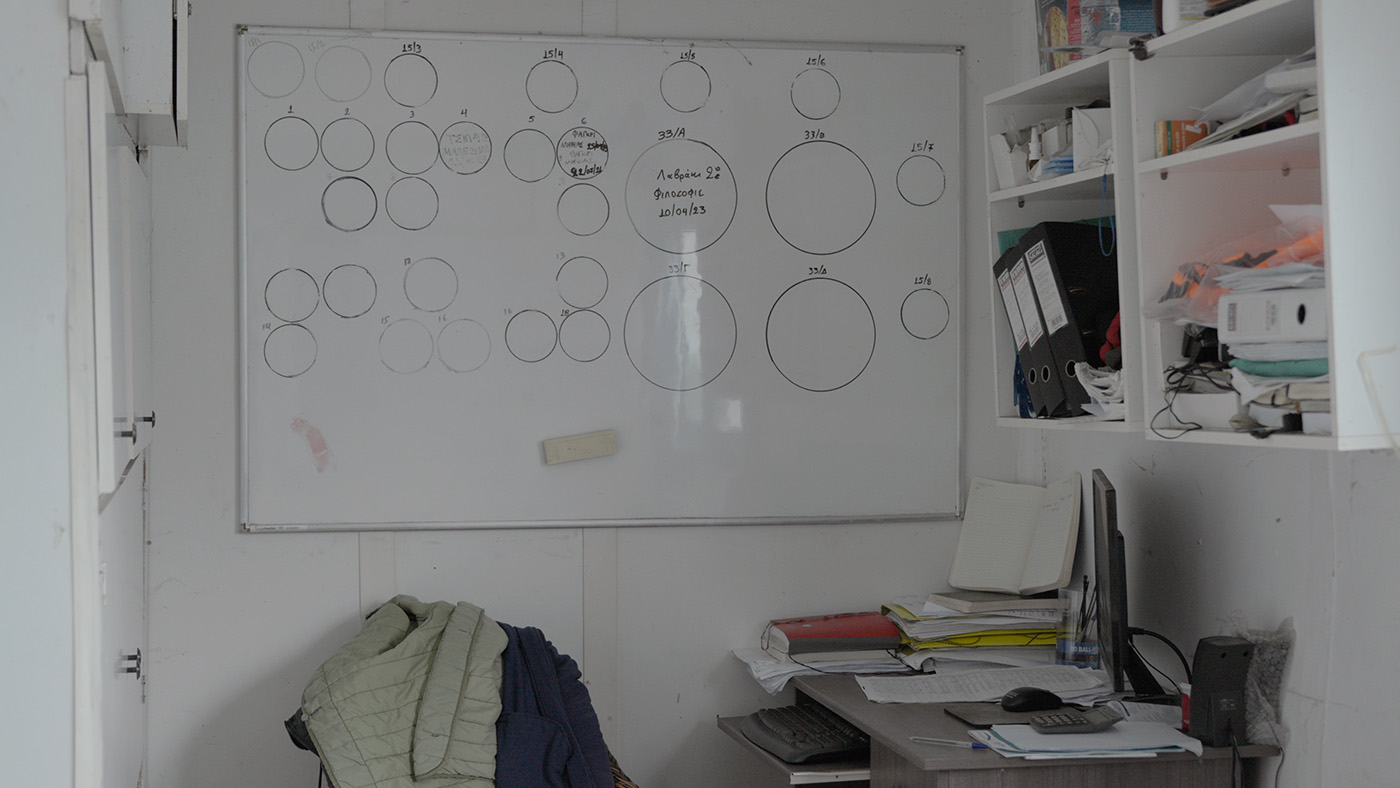
Board in aquaculture office in Mytikas, Western Greece
“The problem is, the planning was done without us. We were never consulted,” Kounadis says. “We could have found balance and space for everyone. Instead, they imposed decisions from above.”
Across the landscape, this transformation is already visible: areas once open to navigation are now occupied by restricted zones which redefine what the sea looks like and how it can be used. Yet, much of aquaculture’s impact remains hidden underwater. Scientific studies on Mediterranean fish farming, for instance, have shown how organic waste and nutrient accumulation beneath marine cages can affect oxygen levels and alter seabed ecosystems, particularly in sheltered coastal areas with limited water circulation.
Avdis responds to these concerns by pointing to monitoring practices within the industry. “We carry out regular checks — water, seabed, fish — every six months,” he says.
For him, the pollution reflects broader pressures on the coast, from runoffs from agriculture and livestock to sewage discharges. “These villages were built for 200–300 people, but in the summer they can host up to 2,000. Naturally, that creates strain,” he argues.
Anthi Yanoulou, lawyer of defense of Municipality of Astakos and legal counsel of Aktaia, says that all economic activities have environmental footprints, but argues that industrial fish farming is uniquely difficult to evaluate because its impacts are often out of sight: measurable only through sampling regimes, models and inspections.
“A system that is difficult to observe becomes difficult to govern,” she says.
In her view, this creates a “regulatory grey zone”: not necessarily because regulation does not exist, but because oversight is inconsistent, contested and vulnerable to political influence.
She also points to a second line of conflict: the apparent imbalance between policy support for aquaculture growth and the lived reality of fishing communities.
The EU has supported the development of aquaculture for years, with subsidies and policies. A 2024 European Parliament report on EU oceans and fisheries policy highlights the strategic importance of aquaculture for “food security” and “the blue economy”. While the report acknowledges aquaculture’s economic role, it also notes growing tensions in coastal areas where competing uses of space make public acceptance increasingly fragile.
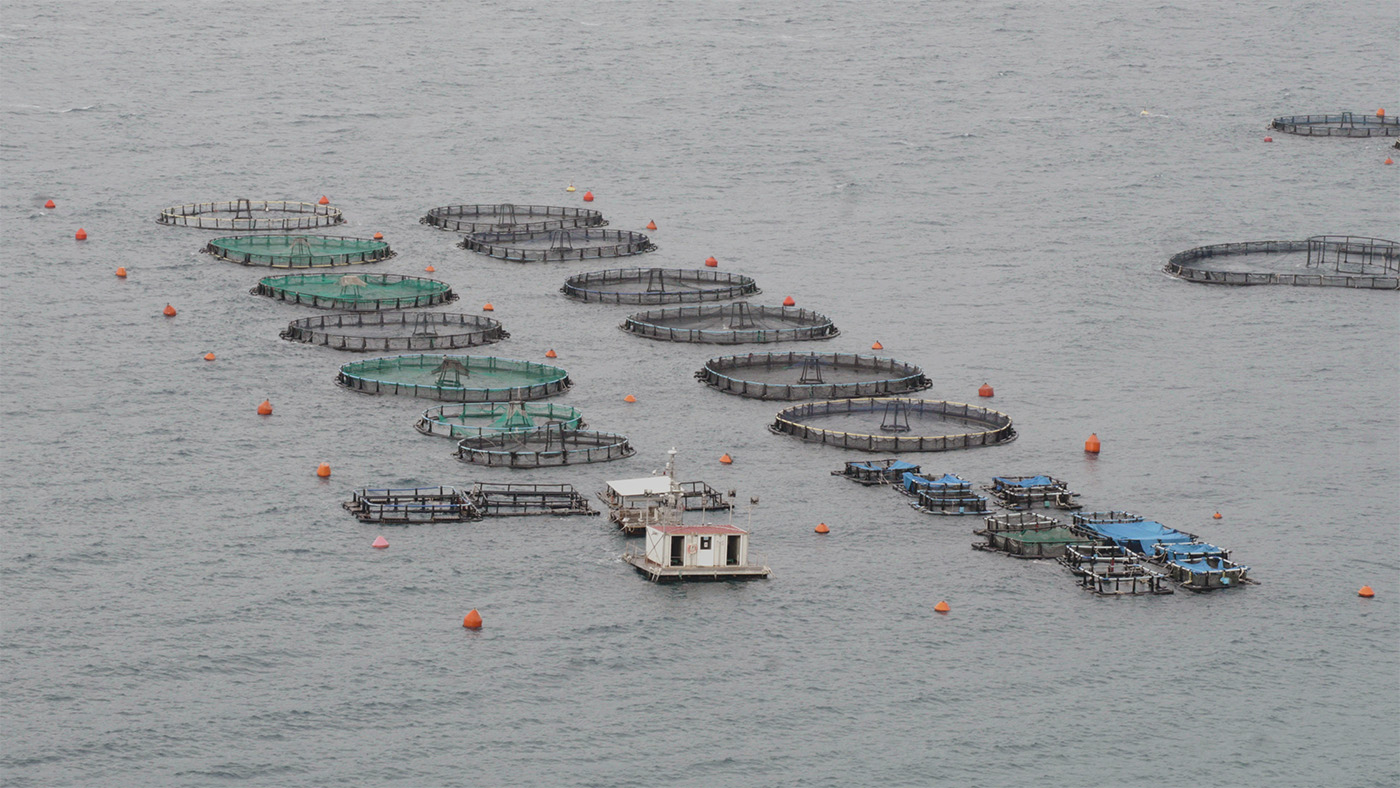
Fish farming cages off the coast of Astakos, Western Greece
The same report points to increasing competition for coastal space between aquaculture, tourism and infrastructure, a dynamic that reduces the space available for small-scale fishing and is described as “coastal squeeze”.
But the development of the aquaculture sector is widely supported by European funding. Greece for instance is set to receive around €364 million under the EU’s Maritime, Fisheries and Aquaculture Fund (EMFAF) for 2021–2027, rising to about €520 million with national co-financing.
At the same time, fisheries account for a larger share of the allocation (57%), as the country has the 2nd largest fishing fleet in the European Union, accounting in 2025 for 20.4% of all EU vessels. But while aquaculture is treated as a growth sector — with funding geared towards investment, innovation and increased production capacity, despite ongoing challenges around licensing and public acceptance — funding for fisheries is mostly directed towards sustainability measures, monitoring and income stabilisation, reflecting a sector under pressure from stock limitations, regulatory constraints and shrinking coastal space.
As demand for fish products remains high across Europe, Mediterranean fisheries have faced years of pressure from overfishing and declining fish stocks. According to a recent FAO assessment, only 35.1% of fishery stocks are exploited within biologically sustainable levels in the Mediterranean and the Black Sea, despite a drop in fishing pressure. Meanwhile, the EU still depends heavily on imports to meet consumption needs, with roughly 70% of seafood supply coming from outside the bloc.
Kounadis somehow confirms this picture describing a continuous wildfish decline over the last six years. He gives a dramatic estimate, around a 70% drop in earnings or catch for certain species. “The sea has dried out,” as he puts this.
He fears fishing has no future. Young people don’t enter the profession anymore; fish species are disappearing. “People won’t pay €20 for wild fish; they’ll pay €7–8 for farmed,” Kounadis says. “Fishing has contributed to the local economy, but it’s being pushed out.”
*Konstantinos Venis contributed to the reporting for this story
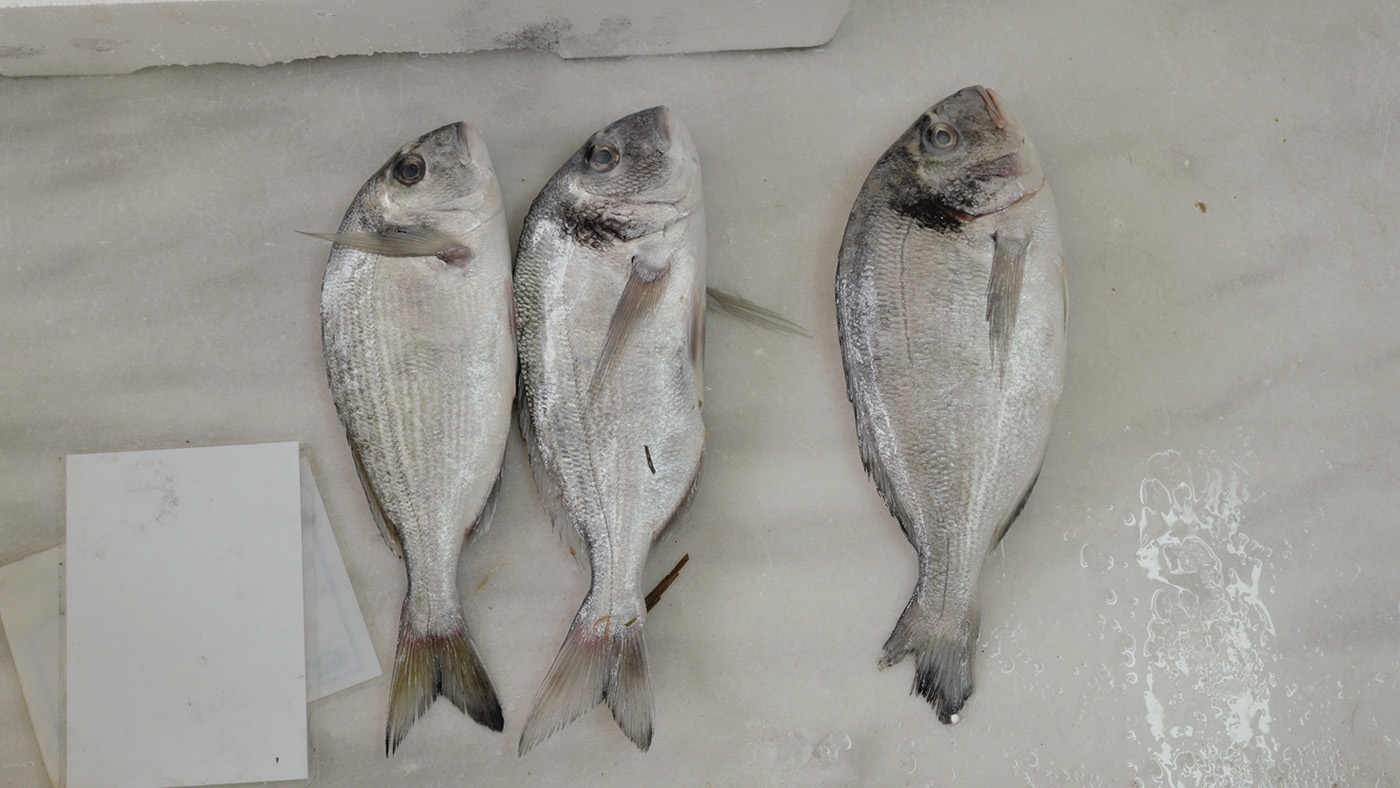
Wild-caught sea breams (left) and farmed sea bream (right) in a local fish market in Astakos, Western Greece
This story was published with support from: