The high concentration of livestock farms in Italy’s Food Valley and the impacts during the heatwave.
by Francesco De Augustinis
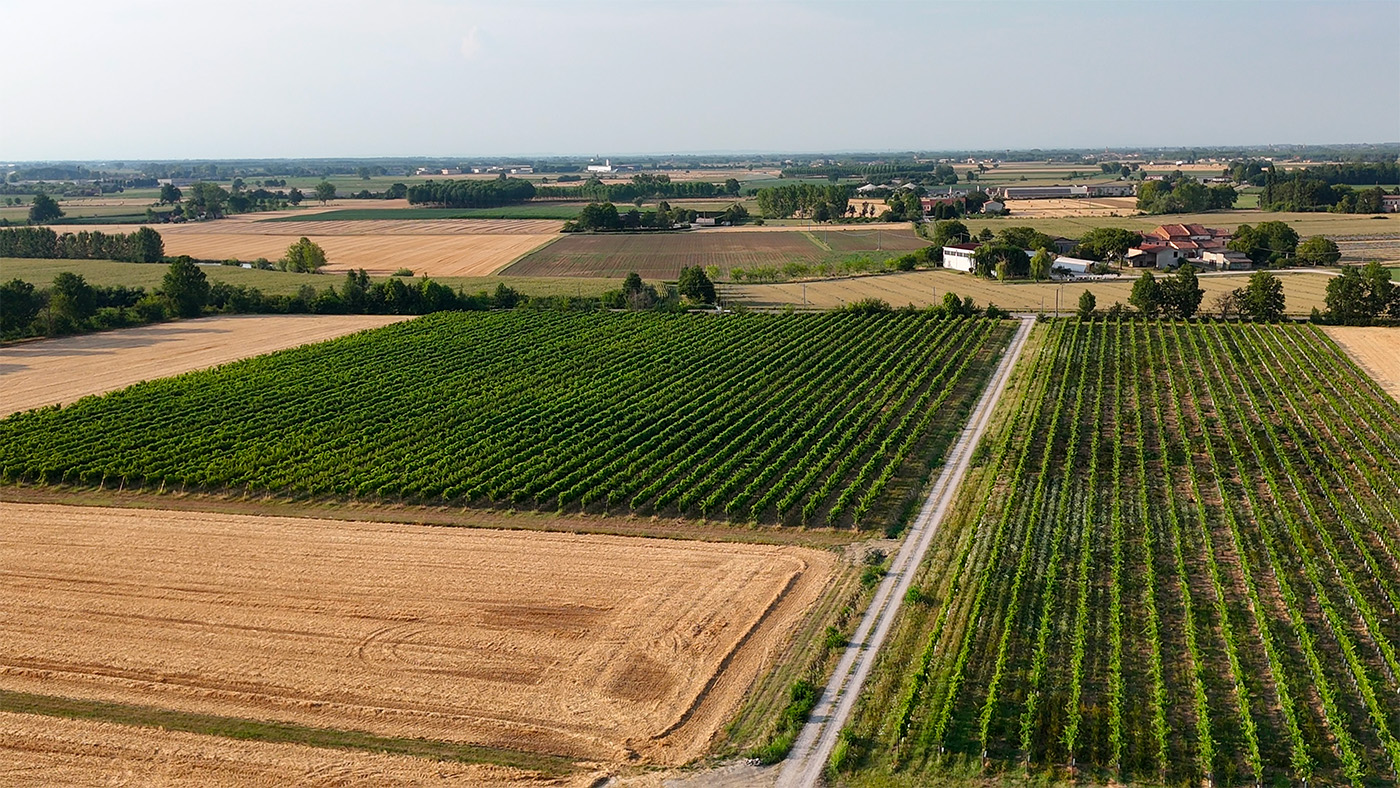
The landscape passing by outside the car window is repetitive: one large livestock building after another—intensive pig farms, cattle barns, and poultry facilities. Between the farms, the fields are planted almost entirely with maize, grown to produce feed for operations that house thousands of animals—sometimes even millions in the case of poultry. Dozens of high-pressure sprinklers irrigate the maize, while tanker trucks spread manure slurry from the farms across neighboring fields. The effect is immediately noticeable when we open the window: together with the extreme heat of these days, a strong smell of manure fills the car.
“In the provinces of Cremona, Mantua, and Brescia, the vast majority of pig, cattle, and poultry farms are concentrated,” says Maria Grazia Bonfante, former mayor of Vescovato, in the province of Cremona. The municipality has around 4,000 residents but is home to approximately 70,000 pigs. Bonfante now coordinates Terre Nostre, an environmental advocacy group that campaigns against pollution linked to intensive livestock farming. “This area accounts for 75 percent of Italy’s total livestock manure production,” she says.
We are here to report on the causes and consequences of nitrogen concentration in this district of the Po Valley, where most of Italy’s livestock production is located. Across the three provinces of Brescia, Mantua, and Cremona, around 3.2 million pigs and more than 1 million cattle are raised during each production cycle. Because of this concentration, Italy has been subject to an infringement procedure by the European Union since 2023 over excessive nitrate levels and the resulting risk of water pollution. Both the Lombardy and Veneto regions have therefore adopted action programmes for the 2024–2027 period.
“Every year, the Lombardy Region publishes a report listing municipalities that are classified as vulnerable or partially vulnerable to nitrate pollution,” Bonfante explains. “Unfortunately, despite all the technology that is supposed to reduce the environmental impact of this type of farming and livestock production, the number of vulnerable municipalities continues to increase. One quarter of the municipalities in Lombardy are fully classified as vulnerable, while half are partially vulnerable.”
At a farm in the province of Mantua, we meet a Greenpeace field team carrying out water sampling to assess potential nitrogen contamination of groundwater used for human consumption.
“Intensive livestock farming produces large amounts of nitrogen-based compounds, which are spread onto agricultural land,” says Simona Savini, Greenpeace’s Agriculture Campaign Manager. “After fertilization, excess nitrogen is washed out of the soil and converted into nitrates,” she explains. According to Savini, “nitrates are highly soluble. They end up in both surface water and groundwater, and can contaminate drinking water sources that draw from those aquifers.”
Greenpeace is conducting this monitoring in several European countries following a study commissioned by the Danish government in 2024, which linked excessive nitrate concentrations in drinking water to an increased incidence of cancer. The study recommended lowering the regulatory limit for nitrates in drinking water from the current 50 milligrams per litre to 4 milligrams per litre.
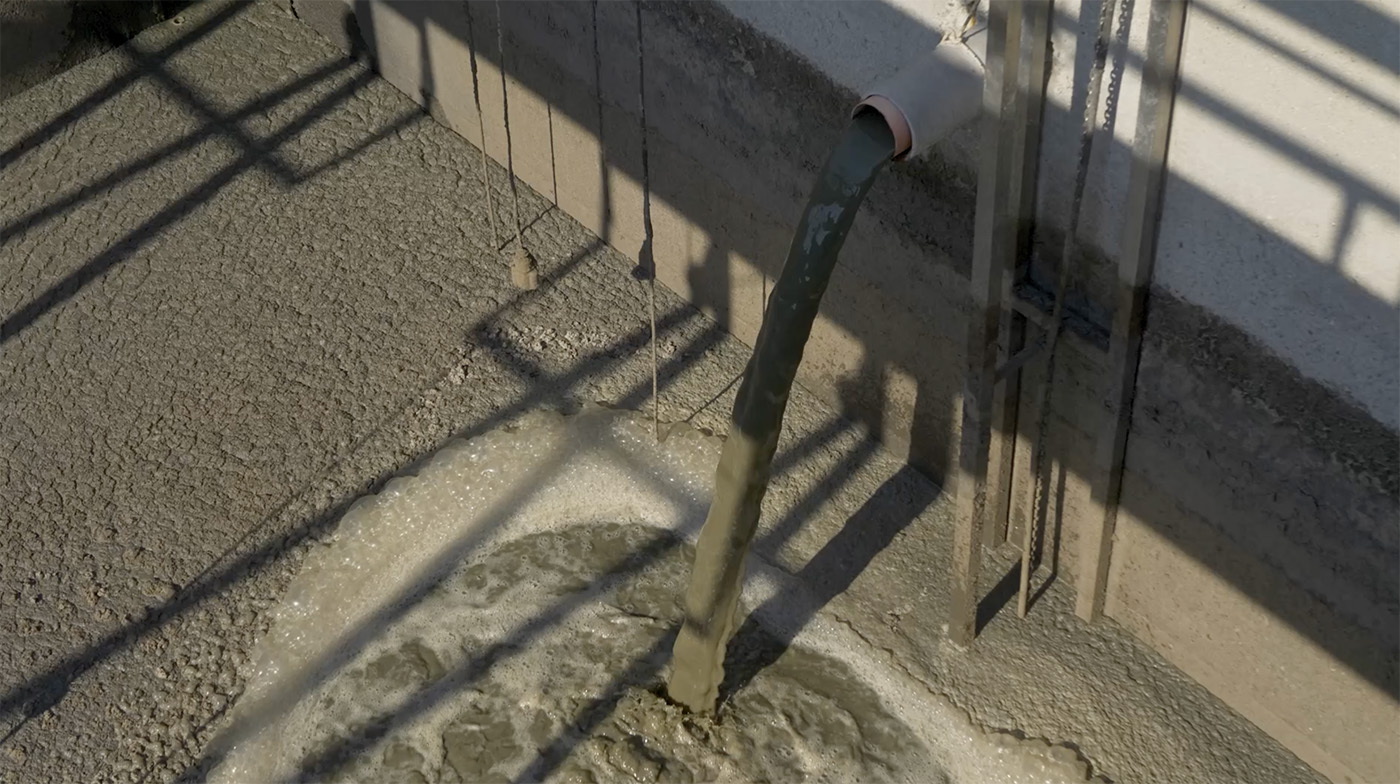
A manure slurry storage tank at a livestock farm in the province of Modena, Italy
Why manure slurry is spread on fields
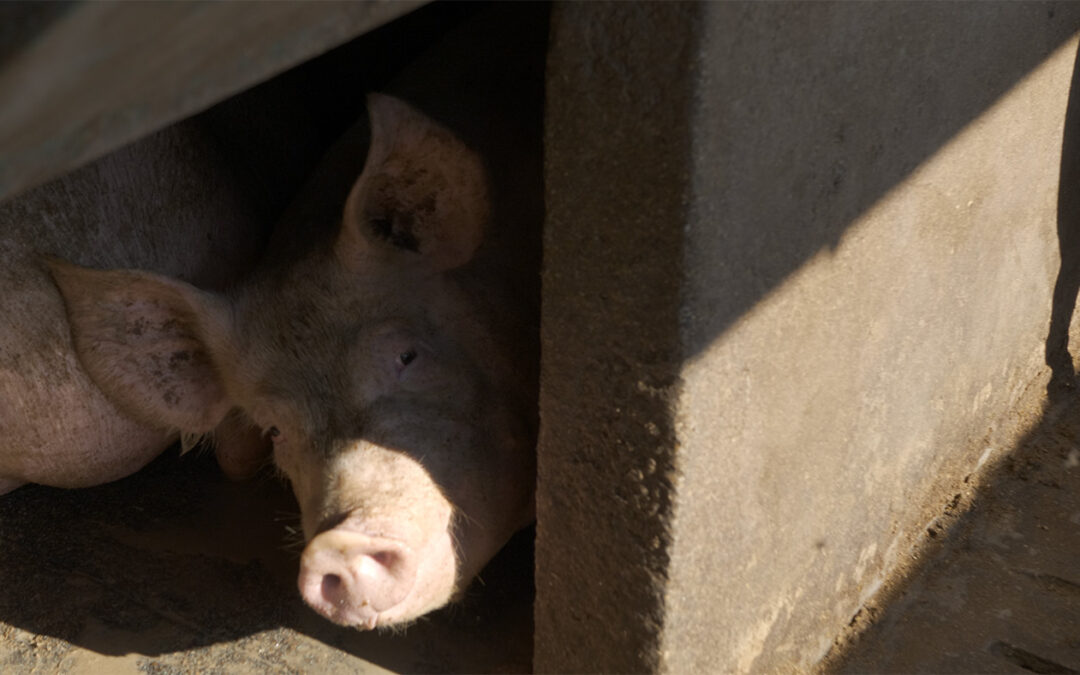
To understand the reasons behind the spreading of livestock waste, we visit a pig farm in the province of Modena with a capacity of around 11,000 animals. For several years, the farm has invested in a waste management system that separates the solid fraction from the slurry. The liquid waste is then treated in a series of open tanks through an “electrolysis” process that releases part of the nitrogen into the atmosphere, while the remaining material is spread onto the fields surrounding the barns through irrigation systems or tanker trucks.
Gaetano Luppi, the farm owner, shows us the tanks that reduce the nitrogen content of the slurry by releasing it into the atmosphere. “It is dispersed as nitrite,” Luppi says. According to the farmer, this process does not cause air pollution: “The biggest problem in the atmosphere is ammonia produced by untreated slurry, but we are talking about minimal quantities,” Luppi says.
The visit to the farm allows us to see how closely connected slurry production is with maize cultivation, which is itself used to produce animal feed. “To produce 15 tonnes of dry grain per hectare, maize requires a high amount of macronutrients—nitrogen, phosphorus, and potassium. We are talking about 350 or 400 units of nitrogen per hectare,” Luppi explains. The farmer spreads slurry on around 200 hectares of surrounding fields where he manages crops. “I try to provide them with the nutrients they need in order to produce as much as possible, and I can do that,” Luppi says. “The important thing is not to exceed 170 units of nitrogen in this area, which is classified as vulnerable. Then I have non-vulnerable areas where I can apply 340 units of nitrogen.”
Part of the solid fraction from this farm is sent to nearby biogas and biomethane plants. These facilities, which have expanded throughout these provinces over the past decade due to the abundance of livestock waste and crops, also play a role in returning nitrogen and other “nutrients” to the soil. The gas production process does not eliminate these substances, which remain in the resulting “digestate,” a by-product that is also spread on fields as fertilizer.
“Trucks arrive here from various places, unloading slurry every day to feed the plant,” says Amilcare Boni, a farmer from the Gussola area in the province of Cremona. We meet Boni at his farm, where he mainly produces maize for animal feed, located directly next to a biomethane production facility. “They also have contracts with many poultry farms,” Boni says. “There is one just one kilometre away with more than one million hens that brings a large part of its poultry manure here.”
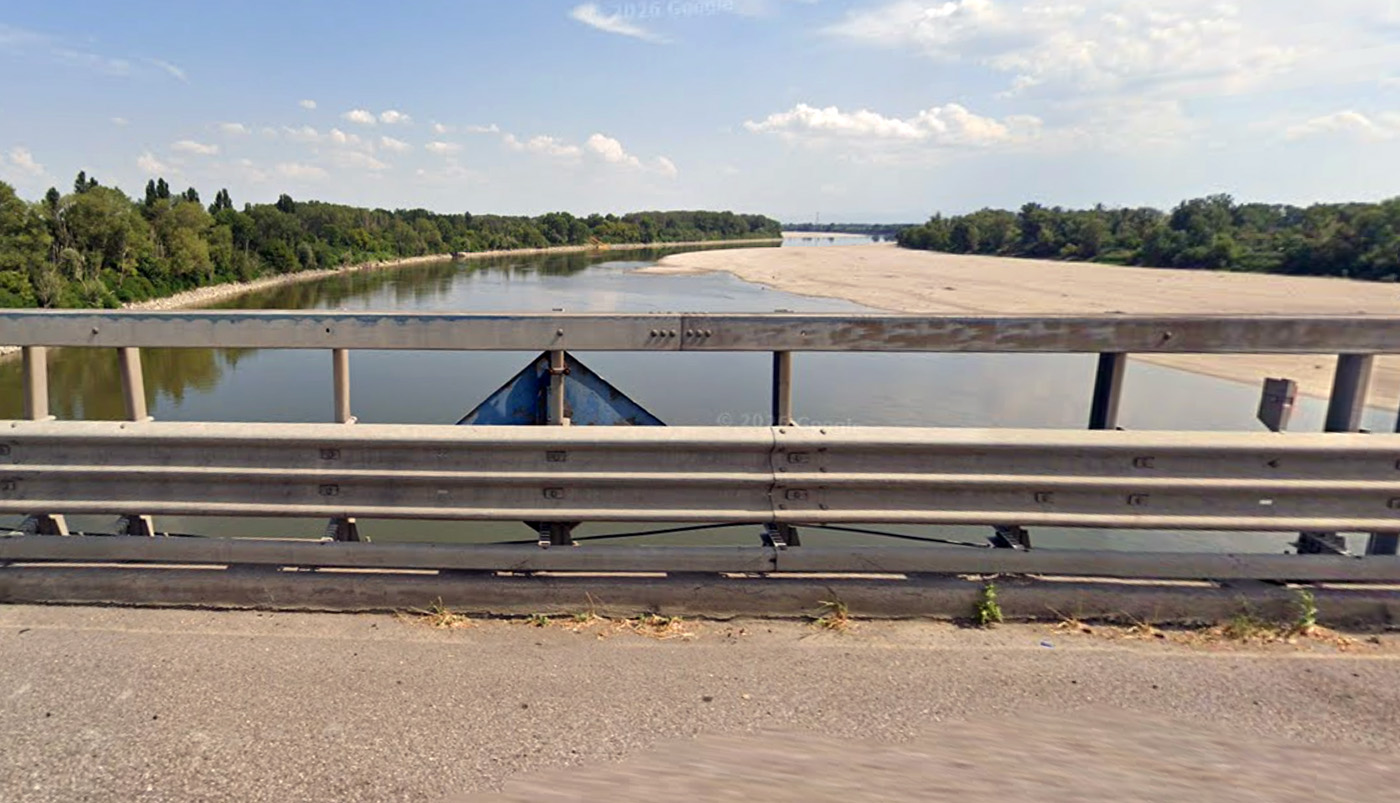
The Po River suffering from water scarcity during the summer of 2026
Climate change
While working on this report about nitrogen-related land pollution, it is the last few days of June, and temperatures across these provinces are breaking record after record. The issue of extreme heat inevitably overlaps with the subject of our investigation, and we are witnessing its consequences firsthand.
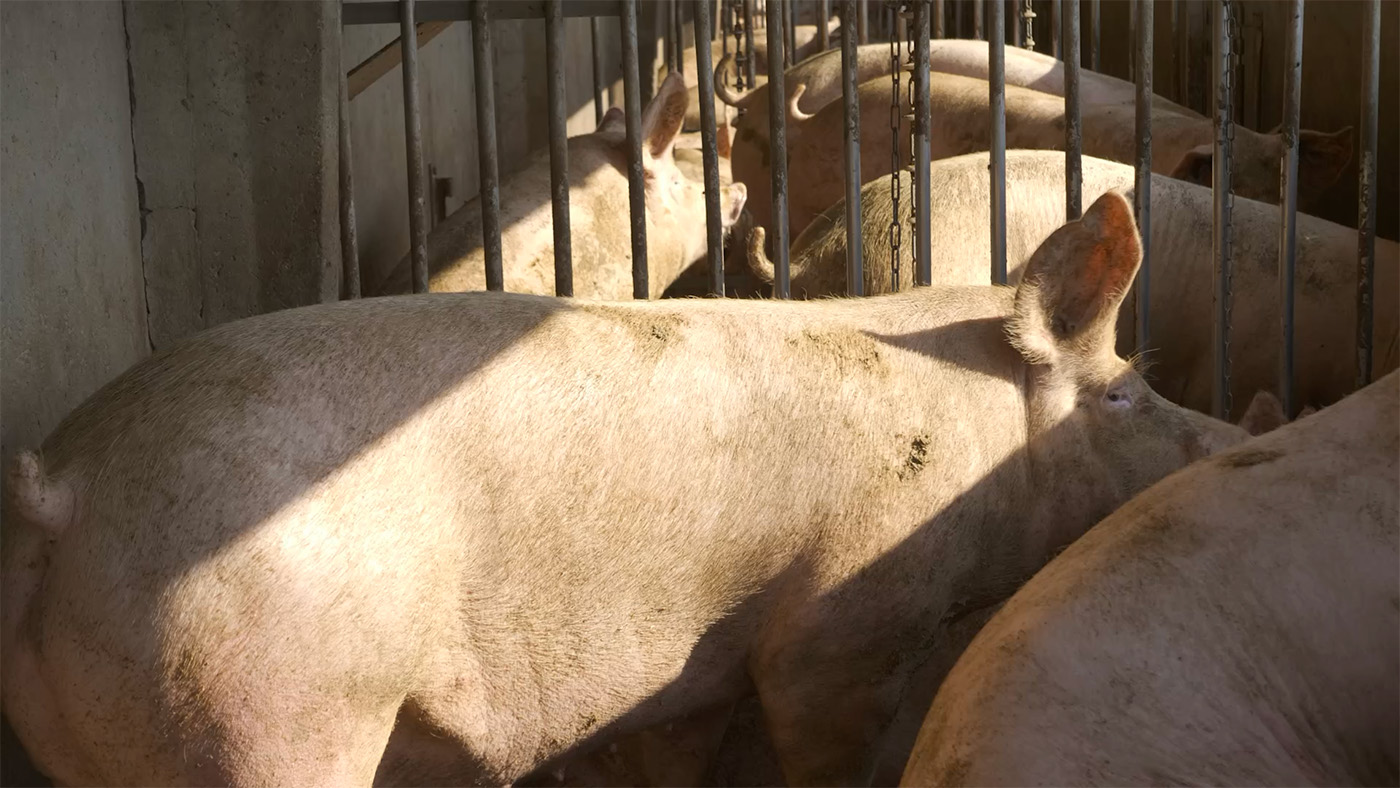
“The temperature outside is the same temperature we have inside,” Luppi tells us, referring to the challenge of managing heat in pig farms. “Inside it is slightly higher, because of the animals’ body heat,” the farmer explains, estimating that temperatures can reach 39°C. Luppi has installed cooling systems in some of his barns, which during our visit allow the indoor temperature to be kept at 35.8°C. According to the farmer, this investment has been necessary to maintain productivity, while farms without such systems face animals suffering from heat stress: they stop eating, reduce feed consumption, slow their growth, and in many cases die. “What happens is that they stop eating, and then those that had respiratory problems when they were young die from pulmonary emphysema,” Luppi says. “Their hearts cannot cope, and you find them dead in the morning.” According to the farmer, mortality rates in farms without cooling systems can double during this period, rising from 1.5% to 3%.
Meanwhile, the scorching heat is affecting not only the animals inside the barns, but also the management of water, irrigation, and livestock waste. “The main canal is empty. It means they cannot draw water from the Po because the river level is too low,” Boni tells us. According to the farmer, the exceptional heat requires more frequent irrigation of maize, a particularly water-intensive crop. However, by the end of June, the water situation in the Cremona area is already critical, with the risk that irrigation may no longer be possible. “Especially when it gets this hot, the crop becomes stressed. Even a little stress is enough—you have to keep it constantly watered,” he says.
We cross a bridge over the Po River. Italy’s largest river has been reduced to a small stream, bordered by a wide expanse of sand. “We are reaching flow rates that were measured in 2022, when the drought event was classified by researchers as an extreme event with a return period of 600 years,” says Rossano Bolpagni, a researcher specializing in water systems at the University of Parma. “The fact that this extreme event is occurring again after just four years is a major warning signal that should force everyone to fundamentally rethink our relationship with water resources.”
According to Bolpagni, the extreme drought conditions inevitably also affect the capacity of soils and water systems to process nitrogen loads. Nitrogen can percolate deeper into the ground, approaching aquifers, or accumulate during dry periods before being released in much higher concentrations when drought is followed by heavy rainfall.
“We have all been scorched by this extraordinarily long heatwave,” says Bolpagni. “A few years ago, meteorological models predicted that heatwaves of this kind, lasting around nine days, would become likely by 2050. Instead, we are experiencing them 25 years earlier than those models projected, and the situation is already far more critical.”
“We are now witnessing the proliferation of wells—more and more of them—pumping groundwater and using it for surface irrigation,” Bolpagni explains, while also questioning the medium- and long-term consequences of this extraction on a water system that is already under severe stress.
The role of intensive livestock farming
Another aspect that is almost entirely absent from the public debate is the role that this production system – based on intensive livestock farming and monocultures grown for animal feed – plays as a driver of the climate crisis itself, which in these regions alternates between heatwaves and floods.
At the international level, this issue was first brought into focus by the landmark FAO report Livestock’s Long Shadow. Published in 2006, the study concluded that the livestock sector alone was responsible for at least 18% of global greenhouse gas emissions. Its impact stems from several sources: direct emissions – including methane from cattle, livestock waste, nitrates, and ammonia – as well as indirect emissions, particularly those linked to deforestation and the intensive use of agricultural chemicals associated with feed production.
Subsequent studies have estimated even higher figures, attributing at least one-third of global greenhouse gas emissions to the food system, much of it connected to the livestock sector. Yet this issue continues to be largely absent from discussions on climate change.
“The number of mammals and poultry raised every year has increased by 33 billion animals since 2006,” says Peter Stevenson, Chief Policy Advisor at the NGO Compassion in World Farming. The organization is part of the Stop Financing Factory Farming coalition, which brings together several civil society groups and recently published the report Livestock Lengthening Shadow, assessing how the situation has evolved twenty years after the FAO report.
The report paints a worsening picture, driven by a sharp increase in the number of farmed animals. Today, it estimates that approximately 84 billion poultry, 1.5 billion pigs, 1 billion cattle, and between 100 and 170 billion fish are farmed worldwide.
“There are warnings from many scientists that we cannot meet the Paris climate goals without a drastic reduction in global meat and dairy production,” Stevenson says. “Despite this, production of these foods has continued to rise, resulting in a 22% increase in greenhouse gas emissions from the livestock sector.”
According to the report’s estimates, emissions are not the only indicator that has worsened. Since the publication of the FAO report in 2006, the amount of land globally devoted to feed production has increased from 4.7 million square kilometres to 6 million square kilometres (+27%), contributing to deforestation and soil degradation. Water use has risen from 112 to 257 cubic kilometres per year – an increase of 129% – meaning that today around 90% of agricultural water use is associated with the livestock sector.
“If we combine the land used for grazing with that used to grow animal feed, livestock production occupies 80% of the world’s agricultural land while providing only 18% of global calories and 37% of global protein,” Stevenson says.
Lobbying and subsidies
The authors of the report cite findings from the United Nations Environment Programme (UNEP), according to which high-income countries should reduce both the production and consumption of animal protein by around 68% by 2050 compared with 2020 levels.
Achieving this goal, they argue, requires political action: reducing subsidies for intensive livestock farming and ensuring that producers bear the social and environmental costs of their activities through taxation measures already experimented with in countries such as Denmark.
“Today, the price of many animal products does not reflect their true social and environmental impact,” says Merel van der Mark, Policy Director at the NGO Sinergia Animal, which co-authored the report. “Costs such as greenhouse gas emissions, water pollution, biodiversity loss, and public health impacts are often borne by society instead of being incorporated into the prices consumers pay.”
The issue of subsidies and environmental costs is precisely why livestock industry lobbies have worked in recent years to push intensive farming off the agenda of international climate negotiations.
“There have now been more than 30 UN climate COPs,” says Nusa Urbancic, CEO of the NGO Changing Markets Foundation, which has long studied the influence of industry lobbying on climate policymaking. “Agriculture is virtually absent from the official documents and negotiating texts.”
According to Urbancic, the most recent climate conference in Belém, Brazil, was a striking example of this paradox. The livestock industry had a significant presence at an event held in the heart of the Amazon rainforest, which continues to be cleared primarily to make way for cattle pasture and soy monocultures destined for animal feed production.
“We have documented how, over the last two or three climate conferences, the number of lobbyists has steadily increased, with some even joining official national delegations,” Urbancic says.
The same influence is evident in Italy, where the country’s main agricultural organizations have spent recent years defending the status quo of the Common Agricultural Policy (CAP), which continues to provide subsidies for intensive livestock farming and feed crops while opposing key measures under the European Green Deal, including the Farm to Fork Strategy and the EU Biodiversity Strategy. Yet, amid the current crisis, these same organizations have returned to call for public support to help farms cope with a climate emergency that, until recently, many had sought to downplay or deny.
This story was also published on: