A new report by the Ngo Coffee Watch exposes deforestation trends in Brazil related to coffee production.
This is a key issue at COP30, which opens in November in Belem.
The producers’ trade association is pushing the EU to once again postpone the anti-deforestation regulation, which would impose a series of very strict requirements on the traceability of imported raw materials.
by Francesco De Augustinis
Deforestation also ends up in the coffee cup: Brazil’s main coffee-producing areas have lost hundreds of thousands of hectares over the past two decades due to direct and indirect impacts of coffee cultivation, according to an extensive analysis of satellite data published today by the US-based NGO Coffee Watch.
“Deforestation for coffee has punched a hole the size of Honduras into Brazilian forest,” says Etelle Higonnet, director of Coffee Watch, which today published the report “Wake up and Smell the Deforestation“. “This is what satellite data, available from the early 2000s to today, shows us,” Higonnet told us.
The research is based on the analysis of three different independent databases on land use and deforestation—MapBiomas, Hansen, and SPAM (NASA)—and focused on Brazil, which is the world’s leading coffee producer, accounting for 40 percent of global production. This record, according to the authors, was achieved in just a few decades at a high environmental cost: “Between 1990 and 2023, planted area more than doubled from 600,000 to over 1.25 million hectares.” Meanwhile, “between 2001 and 2023, over 737,000 hectares of forest were cleared inside coffee farm boundaries” in the so-called “Coffee Belt,” the Brazilian production belt that particularly affects the states of Minas Gerais and Bahia, where the Cerrado (569,000 hectares) and Atlantic Forest (145,000 hectares) biomes bore the brunt.
According to the authors, the overall impact of coffee is much greater: 11 million hectares have been lost in producing districts over the past two decades, with plantations often playing an “indirect” role: “These satellite maps show how coffee reshapes entire landscapes — not just by replacing forests, but by displacing cattle, pushing roads into remote areas, and inflating land speculation,” the report states.
The Brazilian COP30
The issue of deforestation has returned to the forefront in recent months, ahead of the United Nations Conference on climate change (COP30), which will be held in November in Belem, Pará, in the Amazon region of northeastern Brazil.
According to the latest Forest Declaration Assessment, an annual monitoring report that verifies progress toward the UN goal of zero deforestation by 2030, published in October, deforestation rates have remained “stubbornly high” in recent years. In 2024, “global deforestation reached 8.1 million hectares,” well above the projected maximum of 3.1 million hectares, and only a few countries and industries showed progress “matched the urgency of global commitments.”
Brazil is not among the virtuous countries. According to the World Resource Institute, in 2024 it ranked first in primary forest loss, due to a record fire season that destroyed 2.82 million hectares. Most of the fires are attributable to “unchecked, organized criminality” and the advance of agriculture—which in Brazil, as worldwide, is believed to be responsible for approximately 90 percent of tropical deforestation. Between the Amazon, Cerrado, and Atlantic Forest, this advance is primarily reflected in cattle pastures and soybean fields.
Soy has recently been in the spotlight, due to increased Chinese demand in South American countries, led by Brazil and Argentina, driven by the feed industry and the tariffs war with the United States. But with the UN climate summit approaching, attention has also shifted to other supply chains, such as biofuels, wood, and coffee.
According to Coffee Watch, the coffee industry significantly reduced its impact on Brazilian forests in the 2010s, but after 2020, it rebounded, peaking at 45,000 hectares of deforestation in 2023.
European Coffe & Lobbies
Europe has historically been a major destination for forest risk commodities from Brazil. Italy is a major importer of timber, beef (used in “bresaola”), leather, soy for animal feed production, and, of course, coffee. In 2024, Italy imported 238,000 tons of coffee from Brazil (about a third of its needs, according to Eurostat), worth €982.4 million. In the same year, Brazil exported 1,210,000 tons to the 27 EU countries, worth €4.9 billion.
Because of this “weight,” coffee is one of the seven supply chains affected by the European Union’s Anti-Deforestation Regulation (EUDR), which introduces a series of strict requirements on the traceability of raw materials imported from risk countries.
The regulation was scheduled to come into force in December 2024, but was postponed by 12 months, partly due to the coffee lobby. “Should the EUDR be implemented on 30 December 2024 as per the understanding we have today, we fear that the disruptions will be shattering,” Eileen Gordon Laity, Secretary General of the European Coffee Federation, a trade association representing 90 percent of European coffee producers, wrote in a letter to the President of the EU Commission Ursula von der Leyen in February 2024.
After the 12-month postponement was obtained, 2025 brought renewed pressure. In July, Giuseppe Lavazza requested that the European regulation be “postponed for another year” due to the risk of supply disruptions. The Lavazza group did not respond to our requests for comment.
On September 23, the Commission showed signs of weakening, announcing a possible new postponement of the EUDR, which should enter into force on December 30—officially due to technical problems with IT systems.
This announcement was celebrated by the Italian government as a milestone: Foreign Minister Antonio Tajani commented in an interview that “the European Commission did well to suspend the rules on deforestation, which were certainly negative for industry and agriculture.”
Reactions from several MEPs and civil society organizations, and even from a network of companies, including Ferrero, Socfin, and Nestlé, were mixed. In early October, the latter wrote to European Environment Commissioner Jessika Roswall that “The company signatories to this letter, together with their value chain partners – including smallholder farmers – have been actively preparing and investing in compliance with the current provisions of the EUDR, which we have consistently supported” and that “the proposed delay puts at risk the preservation of forests worldwide, will accelerate climate change impacts, and undermines trust in Europe’s regulatory commitments.”
According to some NGOs, the continued postponements also pose a risk in view of the entry into force of the EU-Mercosur (signed on 6 December 2024) and EU-Indonesia (signed on 24 September – one day after the announcement of the possible postponement of the EUDR) free trade agreements, which could render the regulation against deforestation essentially unenforceable.
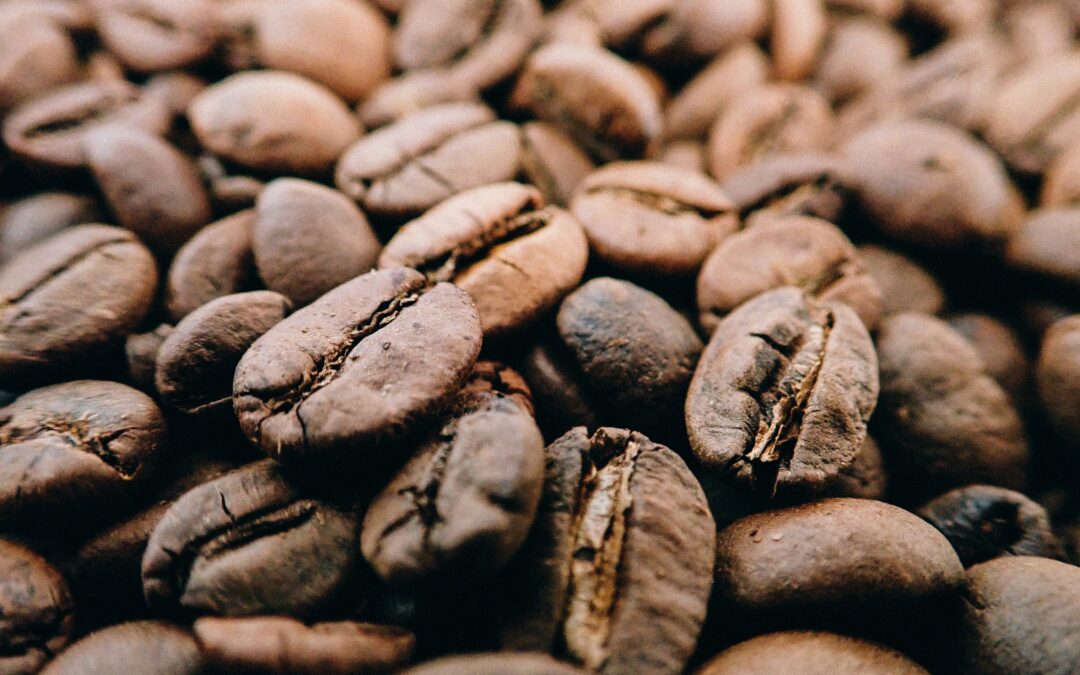
(Photo by Francesco Ungaro on Unsplash)
This story was also published on: