Leather has been excluded from the list of commodities covered by the European Union’s new Deforestation Regulation (EUDR), which will come into force on 30 December 2026.
by Francesco De Augustinis
Leather will no longer be among the commodities covered by the European Union Deforestation Regulation (EUDR), which – after years of delays and political hurdles – is finally set to come into force on 30 December 2026.
The EUDR is widely regarded as one of the flagship pieces of legislation under the European Green Deal. It introduces a set of rules designed to ensure that high-risk commodities imported into the European Union – including timber, beef, palm oil, soy, coffee and rubber – are not sourced from recently deforested land. At the heart of the regulation is an advanced traceability system intended to curb the EU’s contribution to global deforestation.
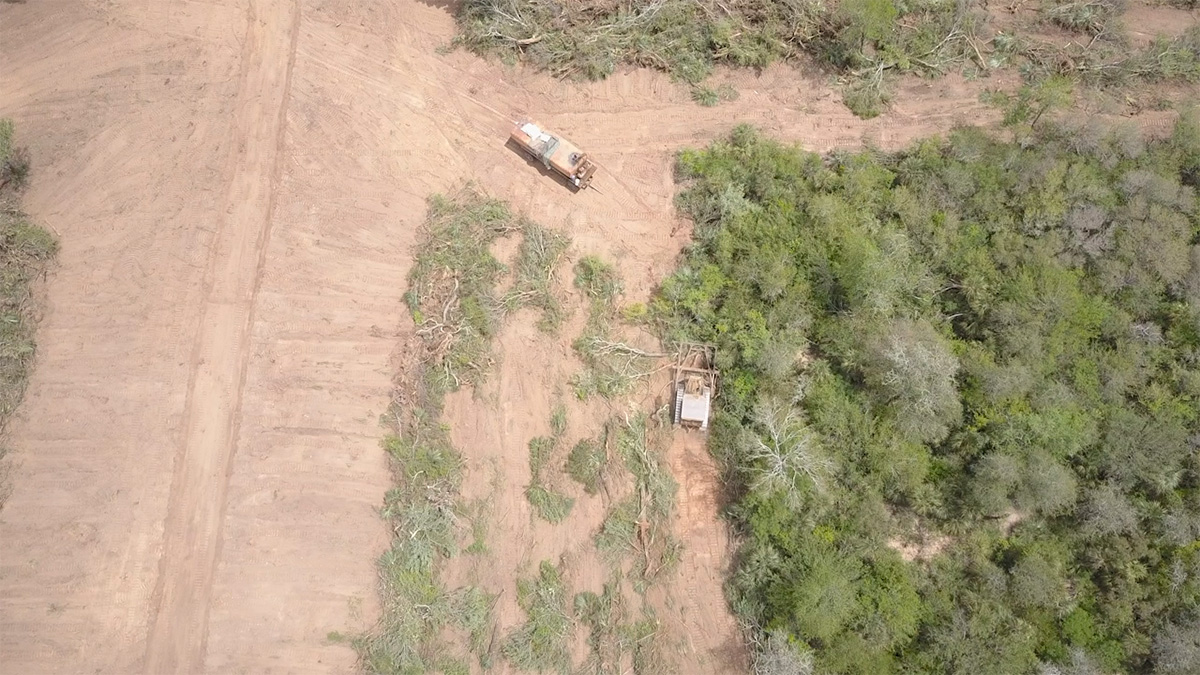
According to the Food and Agriculture Organization (FAO), around 90 percent of tropical deforestation is driven by agricultural expansion, particularly the conversion of forests into cattle pasture and soy monocultures – most of the latter destined for animal feed production – in South America, as well as oil palm plantations in Indonesia and Malaysia.
Cattle ranching is considered the world’s leading driver of deforestation, accounting on its own for around 80 percent of deforestation in the Brazilian Amazon.
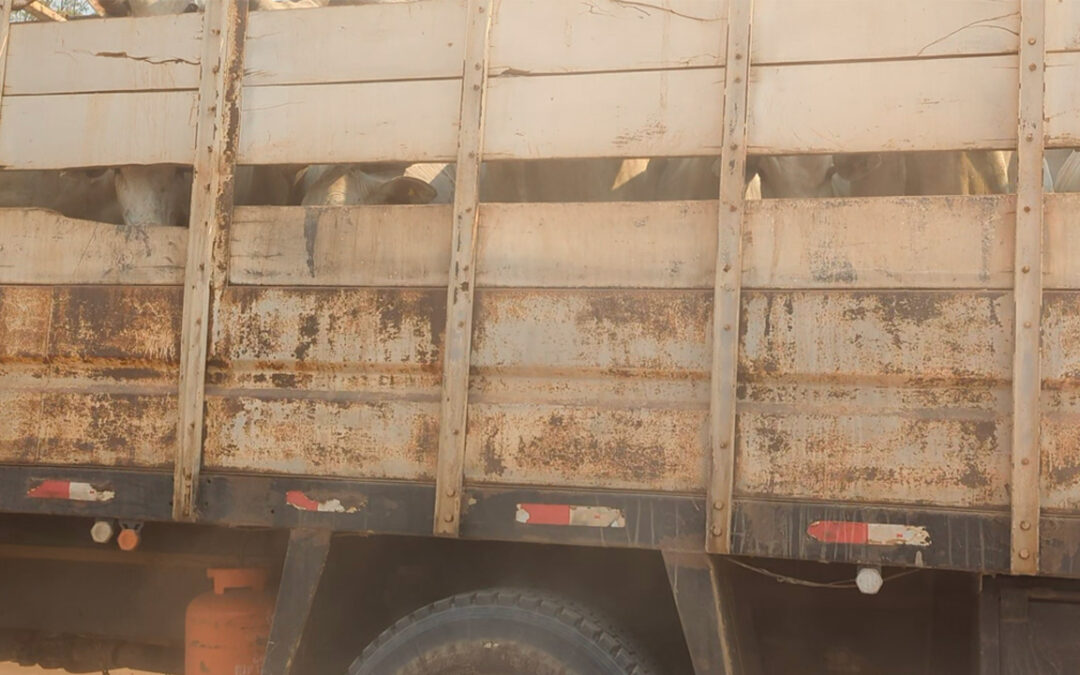
For this reason, the original EUDR text, adopted in 2023, included cattle and cattle-derived products – including raw hides – among the commodities covered by the regulation. The European Union is a major importer of hides from South America, with most shipments destined for Italy, where they are processed by the country’s renowned tanning districts and transformed into high-end products for the furniture, leather goods, fashion, and automotive industries.
In 2025, Italy was the EU’s largest importer of raw hides from Brazil, with imports worth €116 million. It also imported hides from China (€108 million) and the United States (€95 million). Italy was likewise the leading destination for hides exported from Paraguay – another deforestation hotspot – with imports valued at €18 million.
Yet on 13 July, the European Commission approved a simplification package amending the list of commodities covered by the EUDR. Under the revised rules, leather has been removed from the scope of the regulation, meaning that importers of leather will no longer be subject to the same traceability requirements as those applying to the other covered commodities.
Lobbying and the backlash
The removal of leather from the list of commodities covered by the EUDR has been hailed by the tanning industry as a hard-won achievement after years of political engagement.
“Today’s Commission decision is a step in the right direction in ensuring that leather is recognised for what it truly is: a durable material and a by-product of the meat and dairy industries,” said Edoardo De Paola, Secretary General of the European leather industry association Cotance, in a statement.
For years, the tanning industry in Italy and across Europe has argued that leather is a by-product of meat production and that, as a result, traceability requirements should extend only as far as slaughterhouses, rather than to the cattle ranches where the animals were raised – even though those ranches may be located in recently deforested areas.
According to Cotance, this position is supported by guidelines published in June by the United Nations Industrial Development Organization (UNIDO), which estimate that hides account for just 1.5 percent of the economic value generated by the global slaughter industry.
That figure, however, is challenged by a study published the same month by researchers at Cornell University and New York University. The study estimates that leather has a substantially higher economic value – around 5 percent overall – and an even greater share in countries affected by deforestation, such as Brazil and Paraguay, where hides come primarily from cattle raised specifically for beef production rather than from dairy herds.
“We estimate that hides account for about 8 percent of the value at the slaughterhouse,” Matthew Hayek told us. “Whether you call it a by-product or a co-product, it remains a valuable product that supports the economics of slaughterhouses.”
Regardless of the exact figures, many companies in the leather sector have long acknowledged the industry’s connection to deforestation and have therefore joined voluntary traceability and certification initiatives. The best known is the Leather Working Group, although participation in such schemes remains voluntary and is not legally binding.
Neither Cotance nor the Italian leather industry association UNIC responded to our requests for comment.
According to an analysis by the lobbying watchdog LobbyFacts, cited by Mongabay, the two associations met with EU policymakers on at least 22 occasions between 2021 and 2025. The EUDR was discussed in at least 11 of those meetings.
This lobbying effort culminated in a letter sent in June 2025 by Antonio Tajani, Italy’s Deputy Prime Minister and Minister of Foreign Affairs and International Cooperation, to European Commission President Ursula von der Leyen and Trade Commissioner Maroš Šefčovič. In the letter, Tajani called for leather to be excluded from the EUDR or, alternatively, for what he described as a “substantial simplification” of the regulation.
That political pressure ultimately led the European Commission to present, on 4 May 2026, a proposal to remove leather from the scope of the EUDR. The amendment was formally adopted on 13 July, despite the fact that the Commission’s own working group responsible for the dossier had acknowledged in an official document that including leather would have delivered significant environmental and economic benefits.
Unfair competition
In its assessment, the Commission’s working group acknowledged that keeping leather within the scope of the EUDR could have created an “uneven playing field,” because importers of finished products – such as shoes, handbags and other leather goods – would have been able to continue placing them on the EU market without being subject to the same due diligence and traceability requirements that apply to raw materials.
In practice, this would have allowed manufacturers in non-EU countries to continue importing South American hides – potentially linked to deforestation – processing them into finished or semi-finished leather products, and exporting them to the European Union without having to comply with the same rules.
“The inclusion of derived products to address this situation cannot be considered at this stage,” the Commission’s working group wrote, arguing that doing so would have brought an excessively large number of products within the regulation, making it impossible to implement the new rules within the planned timeframe. Instead, the Commission opted for the simpler solution of removing leather imports from the scope of the EUDR altogether.
“To me, this demonstrates a lack of ambition,” Charlie Hammans, a journalist who collaborates with the UK-based NGO Global Witness, told us.
For years, Hammans has investigated the links between leather imports into Europe and deforestation in South America – a connection that ONE EARTH doc also reported on since 2017.
Like many representatives of environmental organisations we interviewed, Hammans expressed disappointment at the Commission’s decision but hopes leather will be brought back within the scope of the regulation during its next scheduled review, due in June 2030.
“I hope that in the coming years we will see a proposal that creates a level playing field between companies that comply with these standards and those that do not, but are still able to export finished or semi-finished products to the European market,” he said.
The decision to exclude leather from the EUDR will become final once it is published in the Official Journal of the European Union, which is expected in mid-September, unless objections are raised by the European Parliament or the Council of the European Union during the following two-month scrutiny period.
This story was also published on: