About 80% of global biofuel production is fueled by corn, sugarcane, palm oil and other dedicated crops, often derived from deforestation – report
by Francesco De Augustinis
Replacing fossil fuels in cars and other vehicles with biofuels could actually increase global greenhouse gas emissions, according to a study released today by the consultancy Cerulogy, commissioned by the NGO Transport & Environment (T&E).
“Biofuels emit 16 percent more CO₂ than fossil fuels,” said Simon Suzan, an analyst at T&E, presenting the findings during an online briefing. The NGO, which advocates for the decarbonization of the transport sector, supports the transition to electric vehicles.
The debate over whether biofuels truly help reduce emissions is gaining momentum in Italy, across Europe, and worldwide. The issue is expected to take center stage at COP30, the United Nations climate summit to be held next November in Brazil—one of the world’s leading biofuel producers. There, governments may seek to promote biofuels as a way to reduce fossil fuel dependency, potentially at the expense of other low-carbon technologies.
Farming for fuel
The Cerulogy report factors in the effects of land use change, long identified as a major driver of the climate crisis. One striking example is tropical deforestation, which the FAO estimates is 90 percent driven by agriculture. To produce crops for biofuels, forests are cleared, or other land uses—such as pastures or food crops—are displaced, with similar environmental consequences.
“Today, most biofuel production still relies on food crops,” Suzan noted. About 80 percent of global output comes from corn (especially in the United States), sugarcane (Brazil), palm oil (Southeast Asia and India), and other dedicated crops. “This won’t change,” he added. “At current growth rates, by 2030, that share will rise to 90 percent.”
According to T&E, this reliance on food crops is already affecting global food security: in 2023, biofuel producers consumed around 150 million tons of corn and 120 million tons of sugarcane and sugar beet—enough calories, the NGO calculates, to feed 1.3 billion people.
And the climate benefits are also in question. The report estimates that, once land-use changes are included, biofuel expansion in the U.S., Brazil, Indonesia, and India could generate more CO₂ than the fossil fuels they replace. “By 2030, biofuels could emit 70 million tons more CO₂ per year than fossil fuels—equivalent to the emissions of almost 30 million diesel cars,” Suzan warned.
A shifting European landscape
Europe once led the global biofuel push, largely using palm oil—a commodity linked to deforestation in Indonesia and Malaysia. In 2022, the European Union banned the use of crude palm oil for biofuel production, favoring so-called second-generation biofuels, made from waste oils and agricultural residues.
The move has curbed deforestation impacts but also slowed European output due to the limited supply of sustainable feedstocks.
The OECD-FAO Agricultural Outlook 2025–2034 projects that first-generation biofuels—produced from purpose-grown crops—will continue to dominate the market, with production growth led by the U.S., Brazil, India, and Indonesia. Ethanol will remain largely derived from corn and sugar, while biodiesel will rely mainly on soybean, rapeseed, and palm oils.
Currently, biofuel crops occupy around 32 million hectares worldwide—roughly the size of Italy—yet cover just 4 percent of global transport energy needs. T&E estimates that, without a policy shift, that area will expand by 60 percent by 2030, reaching 52 million hectares, an expanse comparable to France.
Italy’s role
Italy ranks among Europe’s top biofuel producers, with over 1.6 million tons per year and plans to triple output by 2030. Its production relies largely on palm oil by-products from Malaysia and Indonesia (PFAD and POME) and used cooking oils, many imported from Asia.
Environmental groups have criticized Italy’s supply chain, citing risks of indirect deforestation, food competition, and opaque sourcing. Further controversy surrounds plans to expand feedstock production abroad—especially in Africa—under the Mattei Plan, which aims to strengthen Italy’s energy partnerships.
In Brussels, Italy has taken a leading role in pushing to recognize biofuels as a “zero-emission” technology, in a bid to avoid the EU’s planned phase-out of combustion engines by 2035.
The government has aligned with Germany and other countries seeking to revise the EU CO₂ Regulation for cars by year’s end.
“The biofuel solution is a win–win; it can cut CO₂ emissions by up to 90 percent,” argued Massimiliano De Silvestre, CEO of BMW Italy, during a June event at Eni’s Rome headquarters attended by auto and energy executives as well as government officials. “With 250 million cars already on Europe’s roads, decarbonizing the existing fleet is essential,” he said.
Meanwhile, EU Climate Commissioner Wopke Hoekstra signaled openness to reviewing the engine phase-out rule, saying the Commission would “accelerate work on the planned revision” and consider “all technologies,” including hybrids—a move that could keep combustion engines, and potentially fossil fuels, on the road well beyond 2035.
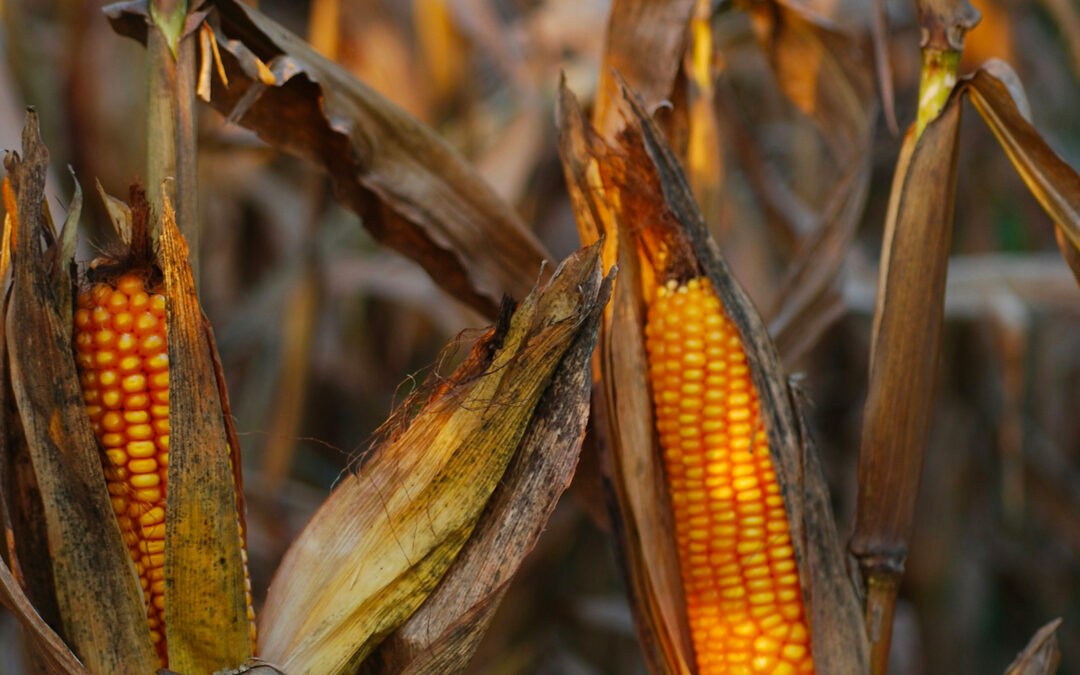
(Photo by Christophe Maertens on Unsplash)
This story was also published on: